


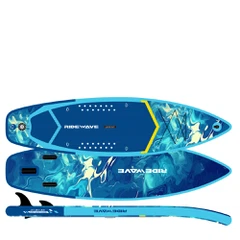
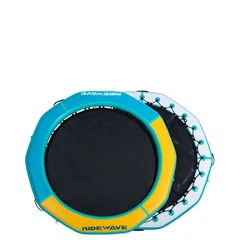
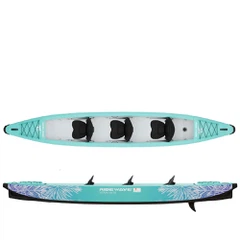
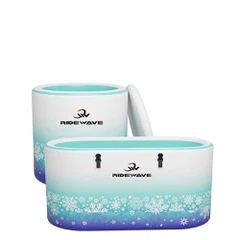
In the fast-evolving world of global trade, the balance between Minimum Order Quantity (MOQ) and production lead time can define a brand's success. For businesses in the inflatable paddle board (SUP) industry, these two factors are not just operational details-they're the backbone of a sustainable and profitable supply chain strategy. Understanding how MOQ and lead time influence your inventory, costs, and market responsiveness is crucial for any B2B buyer or distributor working with OEM/ODM manufacturers in China.
Today's outdoor recreation market moves fast. Retailers must anticipate seasonal peaks, distributors must plan shipments months in advance, and manufacturers must synchronize production cycles to meet international demand. At the heart of all this coordination lie two key numbers: how many units you must order and how long you must wait to receive them. These figures might seem simple, but behind them lies an intricate dance of materials sourcing, labor scheduling, logistics, and quality assurance.
Understanding MOQ: More Than Just a Number
MOQ-or Minimum Order Quantity-is one of the first terms any buyer encounters when sourcing products from a factory. But MOQ is not a random figure. It reflects the manufacturer's production efficiency, raw material procurement constraints, and operational costs.
For example, producing inflatable SUPs involves a complex process of cutting, welding, laminating, and quality testing. Factories rely on economies of scale-ordering large volumes of drop-stitch fabric, PVC material, and accessories like pumps, fins, and leashes-to keep costs per unit competitive. Setting a MOQ ensures that each production run is efficient and that material wastage is minimized.
For brands just starting out, a high MOQ can feel restrictive. However, it's essential to recognize that MOQ also protects product consistency. It guarantees that the manufacturer can allocate resources properly and deliver a stable level of craftsmanship. For established brands, MOQ planning becomes a strategic decision-balancing warehouse capacity, market forecasts, and cash flow.
As Ridewave and many experienced OEM factories have demonstrated, MOQ discussions are best approached as a partnership rather than a negotiation. Manufacturers are often flexible if the buyer provides a long-term cooperation plan, clear branding vision, or potential for repeat orders. The key is communication: explaining your forecast, sharing market expectations, and letting the factory align production efficiency with your business goals.
The True Meaning of Production Lead Time
Production lead time is often misunderstood as simply "how long it takes to make the product." In reality, it's a composite of multiple stages-material preparation, production queue, assembly, quality control, packaging, and logistics coordination.
A typical lead time for OEM inflatable paddle boards in China ranges from 45 to 75 days, depending on the season, complexity of customization, and material availability. During high-demand months (such as pre-summer periods), factories can reach full capacity, leading to extended waiting times. This is why strategic buyers plan ahead and place orders before peak season.
Every step of the production line impacts lead time. If your paddle boards use specialized colors, customized EVA deck patterns, or printed graphics, additional processing time is needed. Even minor changes-such as switching valve suppliers or upgrading to a new handle type-can shift timelines. Understanding this helps you plan product launches with precision.
MOQ, Lead Time, and Inventory Planning
MOQ and lead time are two sides of the same coin. If your MOQ is high, you'll receive products in larger batches-requiring more storage but offering lower cost per unit. If your lead time is long, your business must hold more safety stock to avoid running out of inventory before the next shipment arrives.
The art of supply chain management lies in balancing these two factors. Let's take an example:
A European distributor planning to restock inflatable paddle boards for summer must place orders in early spring. With a lead time of 60 days and a MOQ of 200 units per model, the company must calculate sales velocity, expected market demand, and shipping transit time. A slight miscalculation can lead to either stockouts or overstocking.
That's why successful brands treat MOQ and lead time as strategic levers, not limitations. By coordinating with manufacturers early and sharing forecast data, they can sometimes negotiate rolling production schedules-dividing one large MOQ into multiple smaller shipments to optimize cash flow and reduce storage pressure.
Seasonal Demand and Production Flexibility
Outdoor sports like stand-up paddle boarding are heavily influenced by seasonality. Most demand surges between April and August in the Northern Hemisphere. For factories, this creates intense pressure to manage labor, raw material supply, and logistics during these peak months.
Brands that wait until the last minute to place orders often face higher costs or longer delays. On the other hand, companies that plan their MOQ and lead time strategy in advance-especially with OEM partners like Ridewave-gain priority in production slots and better control over delivery timelines.
To achieve flexibility, manufacturers increasingly adopt modular production models. For instance, producing standardized board cores while keeping customizable elements (like EVA design, logo printing, and color patterns) for later stages allows factories to respond faster to order changes. This agile method shortens lead time without sacrificing creativity.
The Cost Implications Behind MOQ and Lead Time
Both MOQ and lead time directly affect your product pricing and profitability. A higher MOQ generally means lower unit cost, as material purchasing and machine setup costs are spread over more units. Conversely, shorter lead times often require expedited production schedules or priority material sourcing-leading to higher prices.
From the manufacturer's side, maintaining a production line involves significant setup costs: molds, printing screens, color matching, and quality control calibration. If the buyer only orders small quantities, those fixed costs are amortized across fewer products, increasing the per-unit price.
Balancing cost, flexibility, and efficiency is therefore crucial. Some brands choose to maintain long-term relationships with their suppliers, committing to steady annual orders in exchange for lower MOQs or shorter lead times. Others strategically mix "stock models" (ready-to-produce designs) with "custom models" (unique OEM boards) to diversify risk.
Ridewave's approach demonstrates how transparent communication benefits both sides. By clearly outlining production capabilities, material lead times, and minimum batch sizes, they help buyers make informed decisions that align with budget and schedule constraints.
Supplier Collaboration and Production Transparency
In the modern supply chain, transparency is power. B2B buyers increasingly value suppliers who provide visibility into production progress, quality checks, and logistics updates. Long gone are the days when buyers had to send multiple emails just to confirm order status.
Factories that integrate ERP systems, digital tracking, and real-time production dashboards can share updates efficiently. This reduces uncertainty and builds trust-two things that are priceless in cross-border partnerships.
When MOQ and lead time are openly discussed, buyers gain a clear understanding of their supplier's true capabilities. For example, a factory might offer flexible MOQ for returning clients or shorten lead times through pre-booked material inventory. These advantages only emerge when there's open communication and mutual reliability.
Ridewave, for instance, uses a structured production monitoring system that allows clients to understand where each order stands in the workflow-cutting, welding, inspection, or packaging. This level of insight transforms the traditional buyer-supplier dynamic into a collaborative partnership.
The Strategic Value of Long-Term OEM Partnerships
Short-term transactions may fulfill immediate demand, but they rarely create long-term growth. Building a strong relationship with a trusted OEM/ODM manufacturer allows brands to refine MOQ and lead time strategies over time.
When manufacturers understand your sales cycle, market seasonality, and product roadmap, they can proactively plan capacity and materials. This foresight ensures that you always have production slots available when you need them, even during global supply chain disruptions.
In return, consistent cooperation helps factories streamline operations-reducing setup time, improving forecasting accuracy, and ultimately lowering costs for both sides. The result is a more resilient supply chain capable of adapting to market shifts.
Ridewave's long-term partners often benefit from flexible MOQs, faster turnaround times, and priority access to new materials and technologies. These advantages don't come from negotiation-they come from mutual trust and shared growth.
Balancing Efficiency and Responsiveness in 2025 and Beyond
The post-pandemic era has transformed global manufacturing. Buyers expect faster turnaround times, smaller batch orders, and greater customization-all without compromising quality. Meanwhile, inflation and logistics volatility have forced factories to rethink efficiency.
In 2025, the most successful SUP brands will be those that master adaptive supply chain strategies-where MOQ and lead time are not fixed barriers but dynamic tools. By integrating digital forecasting, modular production, and proactive supplier communication, brands can stay ahead of market shifts.
Ridewave continues to lead this evolution. By combining advanced production planning with flexible OEM support, the company empowers partners to build agile, data-driven supply chains. Whether you're an emerging paddle board brand or an established distributor, understanding how MOQ and production lead time shape your supply chain will give you a lasting competitive edge.
Conclusion
MOQ and production lead time are more than operational metrics-they're strategic decisions that shape every aspect of your brand's success. From inventory management to cash flow, from production scheduling to market timing, every choice echoes through your supply chain.
In today's competitive world of inflatable SUP manufacturing, brands that treat their suppliers as strategic partners-not just vendors-will thrive. By collaborating with experienced OEM/ODM manufacturers like Ridewave, you gain access to the transparency, reliability, and flexibility needed to navigate the modern supply chain with confidence.


