

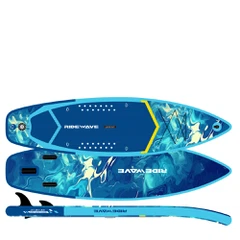
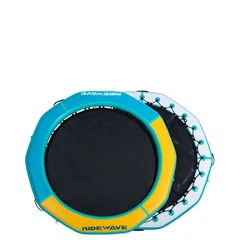
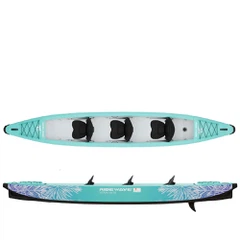
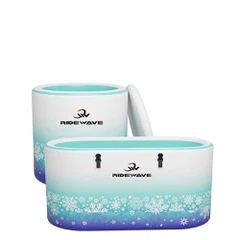

The Stand-Up Paddle Board (SUP) industry is not just a trend anymore; it has become a significant sector in the global water sports and outdoor recreation market. Businesses, distributors, and retailers are paying closer attention to SUP because consumer demand continues to rise across different regions and demographics. From fitness enthusiasts to travelers, families, and adventure seekers, the SUP market is broadening every year.
For B2B buyers, this future matters because investing in the right SUP products can mean faster sales, better margins, and stronger customer loyalty. At the same time, the SUP industry reflects wider changes in consumer values-people want eco-friendly, durable, and innovative products. Companies that adapt to these changes will benefit from a growing wave of opportunities.
Ridewave SUP has positioned itself as a reliable partner in this transition, offering boards that combine performance, sustainability, and affordability. For brands looking to future-proof their business, working with manufacturers like Ridewave ensures access to modern designs, customization, and low-MOQ solutions.
SUP Market Outlook: Trends Shaping 2025 and Beyond

The SUP market is projected to grow steadily over the next decade. Factors like outdoor lifestyle trends, wellness tourism, and water-based activities are all contributing to higher demand. SUP is no longer limited to warm coastal regions; markets in colder countries like Finland, Denmark, and Canada are showing increasing adoption, especially with inflatable SUP boards that are easy to transport and store.
Another factor shaping the future is the shift toward inflatable SUP boards. These are lightweight, portable, and much more affordable than hard boards, making them a preferred option for both rental operators and retail customers. This is exactly where Ridewave SUP plays a role-its inflatable models are designed with reinforced materials, making them durable for both beginners and experienced paddlers.
For businesses, keeping track of regional demand is critical. Europe leads in SUP adoption, with Germany, France, Spain, and Italy representing strong markets. North America continues to dominate in volume, while Asia-Pacific is an emerging market with rapid growth potential.
SUP Innovation: Technology Transforming the Industry
The SUP industry is undergoing a wave of innovation that makes boards smarter, lighter, and more performance-driven. Advanced drop-stitch construction, carbon-reinforced rails, and ergonomic deck pads are no longer luxury features but expected by many buyers. Manufacturers are also exploring modular SUP designs, allowing boards to be used for multiple activities such as fishing, yoga, or even SUP polo.
Another growing trend is digital integration. While still in its early stages, some companies are experimenting with SUPs equipped with GPS, Bluetooth speakers, and fitness tracking technology. These innovations attract younger audiences and create unique selling points for retailers.
Ridewave SUP continuously invests in research and development, ensuring that its boards stay ahead of market needs. Whether it is lightweight inflatable SUP boards for easy transport or customizable branding for retailers, innovation remains at the core of Ridewave's offerings.

Sustainable SUP Manufacturing: Eco-Friendly Practices That Win Buyers

Sustainability is no longer optional; it is a requirement for many buyers and consumers. Eco-conscious customers are looking for SUP boards made with recyclable materials, non-toxic glues, and sustainable packaging. Retailers who can highlight these eco features stand out in competitive markets.
Ridewave SUP takes sustainability seriously. Their boards are made with durable military-grade PVC that extends product life, reducing replacement waste. They also explore recycled materials in accessories and ensure packaging uses minimal plastic. For businesses targeting European markets, this eco-conscious positioning is especially valuable, as EU buyers demand strict sustainability standards.
For distributors, offering eco-friendly SUP boards is not just about responsibility-it's about profitability. Green products often command higher prices and appeal to premium buyers.
SUP Design Trends: From Touring Boards to Yoga & Racing Models
As the SUP industry grows, design diversification becomes a key driver of sales. Touring SUPs, racing SUPs, yoga SUPs, and all-around boards are now standard categories. Rental businesses often choose all-around models for their versatility, while niche retailers may specialize in SUP yoga or SUP racing markets.
Ridewave SUP offers a full portfolio that meets these diverse demands. Their touring SUPs are built for distance and stability, while all-around models provide the best beginner experience. Customized graphics, colors, and brand logos allow businesses to stand out in competitive retail spaces.
Design is not just about aesthetics-it is about functionality. Wider boards attract beginners, while narrow, streamlined models are perfect for competitive paddlers. Having a supplier that understands these needs is critical for long-term business growth.

Global SUP Opportunities: High-Growth Regions to Watch

Certain countries are becoming SUP hotspots due to lifestyle, tourism, and geography. For instance, Spain, Italy, and France are booming markets thanks to coastal tourism. Meanwhile, countries like Poland, Czech Republic, and Russia are emerging markets with strong retail potential. In North America, the U.S. and Canada continue to lead, with Australia also showing year-round growth.
For B2B buyers, entering these regions early offers a competitive advantage. Wholesale distributors and rental operators in these countries are seeking reliable suppliers who can provide consistent quality, competitive pricing, and customization. Ridewave SUP has already established relationships with European and North American buyers, offering scalable solutions for distributors in both mature and emerging markets.
Customization & Branding in SUP: Helping Businesses Stand Out
In a crowded market, customization is key. Retailers and distributors want SUP boards that reflect their unique brand identity. This includes color schemes, logos, deck pad patterns, and even accessories like paddles and bags.
Ridewave SUP excels at providing OEM and ODM solutions. Businesses can order customized SUP boards in low MOQs, reducing upfront investment and making it easier to test new designs in the market. For B2B buyers, this flexibility means they can adapt quickly to local consumer preferences.
Branding also helps in building customer loyalty. When customers see unique SUP designs associated with a retailer, they are more likely to return and recommend the brand.

SUP Accessories & Add-ons: Expanding Profitability Beyond Boards

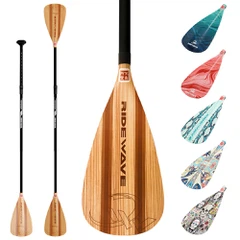
The SUP market is not only about the boards themselves. For B2B buyers, accessories and add-ons are one of the most profitable ways to increase revenue. Customers often begin with a SUP board purchase, but their journey rarely stops there. They also need paddles, pumps, leashes, fins, carry bags, dry bags, waterproof phone cases, and even seats that convert the board into a kayak-like experience. Each of these items represents an additional sales opportunity for retailers and distributors.
From a business perspective, the appeal of SUP accessories is that they generate repeat sales. A customer may buy one board, but they will purchase multiple paddles or replace pumps and leashes over time. Accessories also allow retailers to offer bundles and value packs, which improve margins and enhance customer satisfaction. For example, rental businesses often prefer complete SUP packages that include all the basic accessories, making logistics simpler and improving the customer experience.
Ridewave SUP understands this business dynamic. That's why every Ridewave board comes with a well-thought-out package: adjustable paddles, high-pressure pumps, fins, leashes, and repair kits. This full set ensures that distributors and rental operators can sell a complete solution instead of just a single board. Ridewave also offers the flexibility to upgrade accessories, such as lightweight carbon paddles or electric pumps, depending on buyer preferences. This helps retailers serve both budget-conscious beginners and premium customers looking for higher performance.
Challenges Facing the SUP Industry: Logistics, Costs & Competition
While the SUP market is full of opportunities, it is not without challenges. For B2B buyers, understanding these risks is crucial to long-term success. Some of the biggest challenges today include global logistics, rising material costs, and intense market competition.
Logistics has become one of the most pressing concerns. Shipping costs have fluctuated significantly in recent years, making it harder for distributors to predict pricing and maintain stable margins. Delays at ports or customs also disrupt delivery schedules, which can harm business relationships with retailers and end customers. This is why it is important to work with a manufacturer that not only produces high-quality boards but also ensures reliable supply chain management.
Material costs are another concern. Military-grade PVC, EVA foam, and carbon reinforcements are essential to SUP manufacturing, but their prices have risen in global markets. Buyers must balance affordability with quality, as cutting corners on material often leads to higher warranty claims and lower customer satisfaction. Ridewave SUP helps address this issue by maintaining efficient production, quality inspections, and long-term supplier relationships to ensure stable costs without sacrificing durability.
Finally, competition in the SUP industry is intensifying. New brands enter the market every year, many focusing solely on low-cost production. However, buyers should be cautious-cheap products often lack durability and damage a retailer's reputation. To compete effectively, distributors should focus on differentiation, whether through branding, customization, or sustainability. Partnering with Ridewave SUP allows businesses to combine competitive pricing with reliable quality, ensuring they can stand out even in saturated markets.

Future Opportunities in SUP: Sustainability, Innovation & Partnerships

The challenges mentioned earlier also create opportunities for forward-looking businesses. The future of SUP lies in three main drivers: sustainability, innovation, and partnerships. Companies that prioritize these factors will be the ones to lead the industry in the coming years.
Sustainability will remain at the center of consumer expectations. Buyers, especially in Europe and North America, are increasingly choosing eco-friendly products. Offering SUP boards made with recycled materials, biodegradable packaging, or energy-efficient production methods is not just ethical-it's profitable. Businesses that can market themselves as green leaders often gain stronger loyalty and attract premium customers. Ridewave SUP is already helping B2B buyers by offering durable boards that reduce waste and eco-conscious accessory options.
Innovation continues to push the SUP market forward. From modular designs to smart features like GPS and fitness tracking, innovation creates unique selling points that attract new customer segments. For instance, adventure travelers may prefer a lightweight touring SUP with smart navigation, while families might prefer a stable all-around board with safety features. Retailers who can access innovative products early will gain a clear market advantage. Ridewave SUP invests in ongoing product development, ensuring that its partners always have access to designs that meet evolving consumer needs.
Finally, partnerships are critical. No distributor or retailer can succeed alone in such a competitive industry. Strategic partnerships with manufacturers like Ridewave SUP allow businesses to scale, reduce costs, and expand into new regions with confidence. Collaboration also opens doors to joint marketing, co-branding, and shared sustainability initiatives, all of which strengthen market positioning.
The distribution model you choose has a direct impact on your SUP business. Traditionally, wholesale has been the dominant model-manufacturers sell large batches to distributors, who then resell to retailers. This approach still works, especially in mature markets, but new models are emerging as consumer behavior changes.
Direct-to-retail (D2R) and even direct-to-consumer (D2C) approaches are gaining momentum. Retailers sometimes prefer to work directly with manufacturers, bypassing middlemen to secure better pricing and more customization. For distributors, this means they must offer added value-such as logistics support, after-sales service, or marketing assistance-to stay competitive.
Ridewave SUP is well-positioned for both traditional and modern distribution models. For large distributors, Ridewave offers bulk orders, competitive pricing, and stable lead times. For smaller retailers, Ridewave provides low MOQ customization, allowing them to test new designs without high upfront risk. This flexibility makes it easier for businesses to adapt to local market needs and scale gradually.
Hybrid models are also emerging. Some companies combine wholesale distribution with online D2C channels to maximize reach. B2B buyers should analyze their target markets and select a model that balances cost efficiency, brand control, and customer engagement.

The future of SUP is filled with opportunities for businesses that act today. Rising global demand, eco-conscious customers, and continuous innovation are creating a market that is both profitable and resilient. For B2B buyers, the key is to choose partners that align with these trends and provide reliable, customizable, and sustainable products.
Ridewave SUP is a trusted partner for businesses seeking to capitalize on the future of SUP. With a strong focus on innovation, sustainability, and customer support, Ridewave offers more than just boards-it offers solutions that help businesses grow. Whether you are a distributor entering new markets, a retailer building a private-label brand, or a rental operator looking for durable equipment, Ridewave SUP provides the tools to succeed.
Investing in the SUP future is not simply about following a trend. It is about joining a global movement toward outdoor wellness, eco-friendly recreation, and lifestyle-driven experiences. Those who invest now will not just benefit from rising demand; they will help shape the direction of the industry.
Recommended Articles
1.The Complete SUP Industry Handbook: From Production to Global Distribution
2.Global SUP Market Analysis 2025–2030: Trends, Data & Country Reports
3.SUP Manufacturing Explained: Technologies, Materials & Quality Control Standards
4.SUP Business Operations: From Inventory Management to Retail & Rental Strategies
5.B2B Sales Models in the SUP Industry: OEM, ODM & Private Label Explained