


When it comes to stand-up paddleboarding (SUP), one of the most crucial pieces of equipment is the SUP leash. As a SUP leash supplier, I've had the privilege of witnessing firsthand how these leashes perform in various conditions, especially in rough waves. In this blog, I'll delve into the performance of SUP leashes in rough waves, exploring their design, functionality, and why they are essential for a safe and enjoyable paddleboarding experience.
The Design of SUP Leashes
SUP leashes are designed with specific features to ensure they can withstand the challenges of rough waves. Most SUP leashes consist of three main components: the leash cord, the ankle strap, and the attachment point. The leash cord is typically made of strong, durable materials such as nylon or polyurethane. These materials are resistant to abrasion and stretching, which is crucial in rough waves where the leash may be subjected to significant forces.
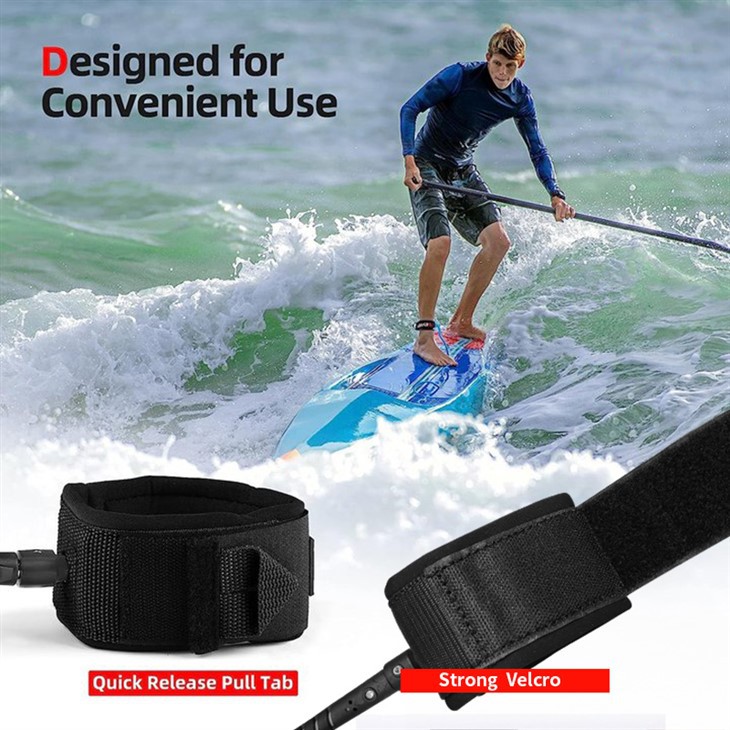
The Sup Ankle Strap is another important part of the SUP leash. It is designed to fit securely around the paddler's ankle, ensuring that the leash stays in place even in turbulent waters. The ankle strap is usually adjustable, allowing paddlers to find the perfect fit for their comfort and safety.
The attachment point is where the leash connects to the SUP board. There are different types of attachment points, including coiled and straight leashes. Coiled leashes are popular because they retract when not in use, reducing the risk of entanglement. Straight leashes, on the other hand, are more suitable for experienced paddlers who need a longer leash for more freedom of movement.
Performance in Rough Waves
In rough waves, the performance of a SUP leash is put to the test. The first thing to consider is the strength of the leash cord. A high-quality SUP leash should be able to withstand the powerful forces exerted by the waves without breaking. This is why it's important to choose a leash with a high tensile strength.
Another aspect of performance is the ability of the leash to stay attached to the paddler's ankle. In rough waves, there is a risk of the ankle strap coming loose, which can be dangerous. A well-designed Sup Ankle Strap should have a secure closure system, such as a buckle or a Velcro strap, to prevent it from slipping off.
The coiling mechanism of a coiled leash also plays a crucial role in rough waves. A good coiled leash should be able to stretch and retract smoothly, allowing the paddler to move freely without getting tangled. In rough waves, the coiling mechanism can help to absorb the shock of the waves, reducing the strain on the leash and the paddler.
Safety Benefits
One of the main reasons why SUP leashes are essential in rough waves is safety. A SUP leash ensures that the paddler stays connected to the board, even if they fall off. This is important because in rough waves, it can be difficult to swim back to the board without a leash. A leash also helps to prevent the board from being carried away by the waves, which can be a significant risk in open water.
In addition to keeping the paddler connected to the board, a SUP leash can also provide a sense of security. Knowing that you are attached to the board can give you the confidence to paddle in rough waves, allowing you to focus on enjoying the experience.
Choosing the Right SUP Leash
When choosing a SUP leash for rough waves, there are several factors to consider. First, you need to determine the length of the leash. A longer leash may be more suitable for experienced paddlers who need more freedom of movement, while a shorter leash may be better for beginners or those who prefer to stay closer to the board.
You also need to consider the type of leash. Coiled leashes are generally more popular for rough waves because they are less likely to get tangled. However, straight leashes may be more suitable for certain types of paddling, such as racing or surfing.

Finally, you need to choose a leash that is made of high-quality materials. Look for a leash with a strong, durable cord and a secure ankle strap. It's also a good idea to choose a leash that has been tested and certified for safety.
Conclusion
In conclusion, a SUP leash is an essential piece of equipment for stand-up paddleboarding, especially in rough waves. The design and functionality of a SUP leash are crucial for its performance in challenging conditions. A high-quality SUP leash can provide safety, security, and peace of mind for paddlers of all levels.
As a SUP leash supplier, I understand the importance of providing paddlers with the best possible equipment. If you're looking for a reliable SUP leash for rough waves, I encourage you to explore our range of Sup Safety Leash options. Our leashes are designed to meet the highest standards of quality and performance, ensuring that you can enjoy a safe and enjoyable paddleboarding experience.
If you have any questions or would like to discuss your SUP leash needs, please don't hesitate to contact us. We're here to help you find the perfect leash for your next adventure.
References
- American Canoe Association. (n.d.). Paddle Sports Safety. Retrieved from https://www.americancanoe.org/
- International SUP Industry Association. (n.d.). SUP Safety Guidelines. Retrieved from https://www.isupa.org/