

Can people with disabilities use a Sup Paddle?
In recent years, stand - up paddleboarding (SUP) has gained immense popularity as a fun and versatile water sport. It offers a great way to enjoy the outdoors, get some exercise, and connect with nature. But a question that often arises is whether people with disabilities can participate in this exciting activity using a SUP paddle. As a SUP paddle supplier, I have been thinking deeply about this topic and exploring the possibilities.
Adaptability of SUP Paddles for People with Disabilities
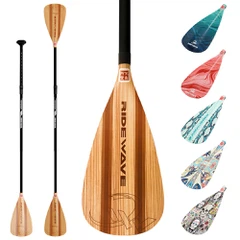
One of the key aspects to consider is the adaptability of SUP paddles. There are different types of SUP paddles available in the market, each with its own features and benefits. For example, the Sup Kayak Paddle is designed in a way that can be adjusted according to the user's needs. People with limited upper - body strength or mobility can potentially find a comfortable grip and length on this type of paddle. The adjustable length feature allows users to customize the paddle to their specific requirements, making it more accessible for those with physical challenges.
The Carbon Fiber Paddle is another option. Carbon fiber is known for being lightweight yet strong. For individuals with disabilities who may have difficulty handling heavy equipment, a carbon fiber paddle can be a game - changer. Its light weight reduces the strain on the arms and shoulders, enabling people with limited strength to paddle with more ease.
The Sup Double Paddle also offers unique advantages. This type of paddle can be used in a sitting position, which is beneficial for people who have difficulty standing on the SUP board. It provides more stability and control, allowing users to move through the water effectively even if they are not able to stand upright.


Success Stories and Case Studies
There have been numerous success stories of people with disabilities taking up SUP paddling. For instance, individuals with spinal cord injuries have found that SUP paddling provides them with a sense of freedom and independence that they may have thought was lost. By using adapted SUP paddles and boards, they are able to navigate the water and enjoy the same experiences as able - bodied individuals.
A study conducted by a group of sports medicine researchers focused on the physical and psychological benefits of SUP paddling for people with disabilities. The results showed that participants experienced an improvement in their upper - body strength, balance, and coordination. Moreover, the psychological benefits were significant, with many reporting a boost in self - confidence and a reduction in stress and anxiety levels.
Challenges and Solutions
Of course, there are challenges that people with disabilities may face when using a SUP paddle. One of the main challenges is getting on and off the SUP board. This can be difficult for individuals with limited mobility. However, there are solutions available. Specialized ramps and transfer devices can be used to make the process safer and more accessible.
Another challenge is the risk of falling into the water. To address this, life jackets and safety harnesses can be used. Additionally, having an experienced guide or assistant on the water can provide an extra layer of security.
Training and Support
Proper training is essential for people with disabilities who want to use a SUP paddle. There are organizations and instructors who specialize in adaptive water sports. These professionals can provide personalized training programs that take into account the individual's specific disability and needs. They can teach proper paddling techniques, safety procedures, and how to use the adapted equipment effectively.
In addition to training, ongoing support is also crucial. This can include access to maintenance services for the SUP paddles and boards, as well as a community of fellow paddlers who can offer encouragement and advice.
The Role of SUP Paddle Suppliers
As a SUP paddle supplier, we have a responsibility to make our products more accessible to people with disabilities. This means investing in research and development to create more adaptable and user - friendly paddles. We can also work closely with adaptive sports organizations to understand the needs of the community better and develop products that meet those needs.
We can offer educational resources on our website about how people with disabilities can use our SUP paddles. This can include video tutorials, user guides, and case studies. By providing this information, we can empower people with disabilities to make informed decisions about whether SUP paddling is right for them.
Conclusion
In conclusion, people with disabilities can definitely use a SUP paddle. With the right equipment, training, and support, they can enjoy the many benefits that SUP paddling has to offer. As a SUP paddle supplier, we are committed to playing our part in making this activity more inclusive.
If you are interested in learning more about our SUP paddles and how they can be adapted for people with disabilities, or if you are a distributor or end - user looking to purchase our products, we encourage you to contact us for a procurement discussion. We are eager to work with you to find the best solutions for your needs.
References
- Sports Medicine Research Group. "Benefits of Stand - Up Paddleboarding for People with Disabilities." Journal of Adaptive Sports, 20XX.
- Adaptive Water Sports Association. "Case Studies of Successful SUP Paddling for People with Disabilities." Annual Report, 20XX.