

Why 2026 Marks a Structural Shift in iSUP Quality Standards
The global inflatable paddle board market is no longer in its rapid expansion phase. By 2026, the industry has entered a consolidation and compliance-driven era. For international distributors, this shift is not theoretical - it directly affects profitability, liability exposure, and brand positioning.
In the past, price competitiveness often outweighed structural durability. Today, buyers in Europe, North America, Australia, and Canada are scrutinizing Inflatable SUP quality standards 2026 with far greater intensity. Regulatory oversight has tightened. Retail platforms are enforcing stricter supplier vetting. Insurance providers are raising premiums for products lacking documented safety compliance.
For distributors, iSUP quality is now a risk management issue - not just a sourcing decision.
Three global forces are driving this shift:
Rising Product Liability in Mature Markets
In the United States, consumer litigation risk has increased, especially in outdoor recreation categories. Importers are increasingly required to demonstrate traceable compliance with safety benchmarks. Without clear documentation of iSUP certification requirements, distributors assume full liability in the event of failure.
Europe has implemented the updated General Product Safety Regulation (GPSR), strengthening traceability and recall obligations. Canadian authorities require bilingual labeling and stricter transport compliance for inflatable watercraft. Australia has intensified consumer safety enforcement in marine-related products.
ESG and Supply Chain Transparency Expectations
Environmental and governance considerations now influence procurement decisions. Large retailers increasingly require documented material safety, reduced solvent processes, and supply chain traceability.
Manufacturers such as RIDEWAVE have responded by upgrading lamination processes, reducing solvent-based adhesives, and maintaining detailed batch records. These improvements are not marketing-driven - they are compliance-driven responses to global procurement standards.
Platform and Retailer Gatekeeping
Major e-commerce and specialty outdoor retailers are conducting deeper supplier audits. Quality failures in accessories (pumps, paddles, valves) now trigger listing suspensions.
Distributors who align with factories operating under structured SUP manufacturing quality control systems reduce long-term operational risk
Understanding Global iSUP Certification Requirements in 2026
For international distributors, understanding iSUP certification requirements is essential before placing volume orders. Certification is not a label - it is a documented technical system.
Different markets require different compliance frameworks.
Final Solution
iSUP Certification Requirements in the European Union
●CE marking supported by a Declaration of Conformity
●Alignment with EN ISO 6185 standards (inflatable boats classification)
●REACH compliance for chemical safety
●Updated GPSR documentation
●Technical file availability
Retail Big Data
●ASTM alignment for inflatable recreational products
●Accurate labeling regarding weight capacity and PSI
●Compliance with California Proposition 65
●Clear warranty documentation
Industrial Big Data
Australia emphasizes consumer safety compliance and marine durability. Canada requires bilingual labeling and transport conformity.
International distributors supplying multiple markets must avoid a "one-spec-fits-all" product strategy. Instead, SKU-level compliance adaptation ensures smoother customs clearance and retailer acceptance.
iSUP Structural Integrity Standards: What Defines Durability in 2026
Certification ensures legality. Structural integrity ensures longevity.
In 2026, Inflatable SUP quality standards increasingly focus on measurable structural performance indicators rather than marketing claims.
Distributors evaluating factory partners should examine four key areas.

High-Density Drop Stitch Construction in iSUP Manufacturing
Drop stitch density determines stiffness and long-term deformation resistance.
Low-density constructions may reduce cost but compromise rigidity under load. High-density cross-woven structures maintain board shape and reduce flex, particularly for touring and fishing models.
RIDEWAVE has transitioned toward high-density woven drop stitch cores, improving weight-to-stiffness ratio while maintaining manageable production efficiency.
For distributors, higher density translates into:
-
Reduced warranty claims
-
Better customer reviews
-
Improved brand positioning
Fusion Lamination vs Traditional Glue in iSUP Production
Traditional hand-glued double-layer construction can introduce long-term delamination risk.
Machine-based fusion lamination reduces adhesive weight and enhances structural bonding consistency. This process also aligns better with ESG expectations due to lower solvent usage.
RIDEWAVE integrates full-machine fusion lamination in most 2026 models, enhancing seam integrity and reducing long-term fatigue.

Seam Welding and Pressure Retention Standards for iSUP
Seam failure remains one of the most common structural defects in low-quality boards.
Professional factories conduct:
-
24-hour inflation tests
-
Pressure decay measurement
-
Thermal expansion simulation
Boards rated at 15 PSI must withstand sustained inflation without seam creep. Marketing claims of 18 PSI are irrelevant if structural reinforcement is inadequate.
Structured SUP manufacturing quality control systems document these test results per batch.

iSUP Accessory Quality Standards: The Most Overlooked Risk in 2026
When discussing Inflatable SUP quality standards 2026, most conversations focus on board construction. However, global warranty data shows a different pattern.
In many markets, accessory failure - not board failure - triggers negative reviews and replacement claims.
For distributors, this represents a hidden cost center.
4.1 iSUP Pump Reliability Standards and Pressure Accuracy
Air pumps are the most frequently replaced accessory in entry- and mid-level packages.
Common failure points include:
●Plastic piston cracking under cold temperatures
●Pressure gauge inaccuracy
●Valve leakage
●Hose joint fatigue
A board rated at 15 PSI becomes unsafe if the gauge reads inaccurately. Over-inflation increases seam stress; under-inflation reduces rigidity and user satisfaction.
Under structured SUP manufacturing quality control, factories should conduct:
●Randomized pump pressure calibration checks
●Cold environment simulation tests
●200+ cycle durability tests
RIDEWAVE integrates pump batch inspection protocols and PSI calibration verification before shipment. This reduces avoidable after-sales disputes.
For distributors, high pump reliability means:
●Lower negative marketplace reviews
●Reduced replacement shipping costs
●Fewer customer support escalations
iSUP Paddle and Valve Durability Requirements

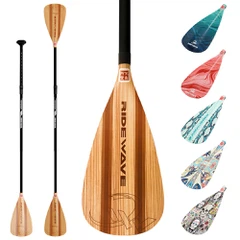
Paddles are often sourced from secondary suppliers. Quality inconsistency between batches can damage distributor credibility.
Key inspection points:
●Shaft flex tolerance
●Blade bonding strength
●Locking mechanism fatigue
●Corrosion resistance in saltwater markets
Valve systems must meet airtightness standards and withstand repeated inflation cycles.
Factories aligned with modern Inflatable SUP quality standards 2026 maintain accessory supplier audits alongside board production audits.
RIDEWAVE consolidates accessory sourcing under controlled supplier evaluation programs, ensuring batch-to-batch consistency.
iSUP SUP Manufacturing Quality Control Systems Distributors Must Audit
As regulatory scrutiny increases, distributors must move beyond product samples and evaluate systems.
A reliable factory demonstrates process control, not just product appearance.
5.1 iSUP Raw Material Traceability and Batch Documentation
Under evolving iSUP certification requirements, traceability is becoming mandatory.
Factories should provide:
●Drop stitch batch codes
P●VC supplier documentation
●Adhesive composition records
●Incoming material inspection reports
Without batch-level tracking, recall management becomes impossible.
RIDEWAVE maintains internal coding systems linking production date, material batch, and inspection record. This enhances recall responsiveness if required.
iSUP 24-Hour Inflation and Pressure Decay Testing
One of the most reliable structural indicators is long-duration inflation stability.
Professional factories conduct:
-
●24-hour inflation retention test
-
●PSI loss measurement
-
●Seam visual inspection
-
●Load simulation under weight
Boards failing to maintain stable pressure often develop micro-leaks that appear after retail sale.
RIDEWAVE performs documented pressure retention testing prior to final packaging, reducing post-sale failure rates.
For distributors, documented test reports strengthen retailer negotiations and insurance discussions.


iSUP Pre-Shipment Inspection and Random Sampling Protocols
Sample approval is insufficient. Real protection comes from random sampling per batch.
Best practice includes:
-
●AQL-based inspection ratios
-
●Carton drop testing
-
●Accessory completeness check
-
●Serial number confirmation
Factories with structured SUP manufacturing quality control systems will allow third-party inspection and provide full transparency.
RIDEWAVE supports independent inspection before shipment, aligning with global distributor expectations.
ESG and Sustainability in iSUP Production: 2026 Procurement Filter
Environmental accountability has become part of Inflatable SUP quality standards 2026.
Distributors increasingly face retailer questionnaires regarding:
●Solvent reduction
●Waste management
●Carbon footprint
●Material recyclability
PVC remains the dominant material, but solvent-reduced lamination processes reduce volatile emissions.
RIDEWAVE has progressively integrated fusion construction methods that lower solvent dependency and improve structural consistency.
From a distributor perspective, ESG alignment delivers:
●Improved retailer acceptance
●Stronger brand credibility
●Future-proof supply chain positioning
Ignoring ESG risks exclusion from premium distribution channels.
iSUP Warranty Economics: How Inflatable SUP Quality Standards 2026 Directly Impact Distributor Profit
Quality discussions often remain technical. For distributors, the real question is financial.
How do Inflatable SUP quality standards 2026 influence gross margin and long-term profitability?
The answer lies in warranty economics.
iSUP Return Rate vs Net Margin Model
Consider a simplified model:
Warranty Cost = Return Rate × Landed Cost × Replacement Logistics
Example:
●Landed cost per board: $180
●Return rate: 3% vs 8%
●Replacement logistics per unit: $70
At 3% return rate:
0.03 × $180 × $70 = manageable warranty expense
At 8% return rate:
Returns nearly triple operational impact.
Beyond direct replacement cost, hidden costs include:
●Customer service labor
●Negative marketplace ranking
●Retailer penalty fees
●Lost repeat business
Factories operating under structured SUP manufacturing quality control systems significantly reduce variability in return rates.
RIDEWAVE's focus on 24-hour inflation testing, batch tracking, and accessory inspection is designed not for marketing appeal - but for return-rate control.
For distributors, lower defect variability equals predictable margin performance.
iSUP Supplier Red Flags in 2026: How to Identify Substandard Factories
As compliance tightens, low-standard factories often rely on aggressive marketing rather than measurable data.
Distributors should watch for the following warning signs.
iSUP Unrealistic PSI Marketing Claims
If a supplier promotes 18–20 PSI without providing seam reinforcement data, it indicates marketing inflation rather than engineering validation.
Pressure rating must be supported by structural design and documented testing.
Missing iSUP Certification Requirements Documentation
Red flags include:
●CE certificates issued by unknown testing entities
●No technical file access
●Incomplete Declaration of Conformity
●Lack of traceable batch coding
Under current iSUP certification requirements, documentation must be systematic, not symbolic.
Weak SUP Manufacturing Quality Control Transparency
Warning signals:
●Refusal of third-party inspection
●No 24-hour inflation testing records
●Accessory sourcing outsourced without audit
●Inconsistent sample quality
Established manufacturers such as RIDEWAVE maintain open inspection policies and structured documentation systems.
For distributors entering 2026 procurement cycles, supplier transparency is non-negotiable.
How Mature iSUP Manufacturers Structure Quality Systems in 2026
Rather than focusing solely on product attributes, experienced manufacturers design systems.
A mature iSUP production model typically includes:
●Integrated raw material sourcing
●Internal quality inspection teams
●Documented inflation and seam testing
●Accessory supplier evaluation
●Batch-level traceability
RIDEWAVE's 2026 production framework aligns with these principles:
●High-density woven drop stitch
●Machine fusion lamination
●Documented pressure retention testing
●Accessory inspection before packaging
●Third-party inspection support
This structure enables distributors to present their product portfolio as compliance-ready rather than price-driven.
iSUP Procurement Strategy for International Distributors in 2026
To align with Inflatable SUP quality standards 2026, distributors should adopt structured procurement planning.
Market-Specific iSUP SKU Compliance Strategy
Avoid one universal specification.
Instead:
●EU-specific labeling
●US liability documentation
●Australia marine durability testing
●Canada bilingual packaging
This reduces customs delay and retail rejection.
iSUP Long-Term Supplier Alignment
Short-term price advantages often lead to long-term instability.
Strategic alignment with manufacturers that invest in structured SUP manufacturing quality control improves consistency over multiple seasons.
RIDEWAVE works with distributors on multi-season product planning rather than single-shipment transactions.
Final iSUP Quality Checklist Before Placing 2026 Orders
Before confirming your 2026 production order, verify:
✔ CE documentation with technical file
✔ ASTM alignment for US shipments
✔ 24-hour inflation test records
✔ Drop stitch density confirmation
✔ Fusion lamination specification
✔ Accessory batch inspection
✔ Batch traceability system
✔ Third-party inspection availability
✔ ESG documentation (if required by retailers)
✔ Warranty terms clearly defined
Distributors who follow structured verification protocols reduce operational uncertainty.
Conclusion: Inflatable SUP Quality Standards 2026 Are a Competitive Filter
The 2026 global iSUP market is no longer defined by volume alone. It is defined by compliance, durability, and documented quality systems.
Distributors who align with manufacturers operating under structured SUP manufacturing quality control gain:
●Lower warranty volatility
●Stronger retailer acceptance
●Reduced liability exposure
●More predictable gross margins
Manufacturers such as RIDEWAVE represent this shift toward system-driven production - combining structural engineering improvements with traceable compliance documentation.
In 2026, quality is not an added value feature.
It is the entry requirement for sustainable distribution.