
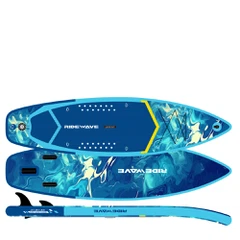
Traditional Double-Layer Construction: Maximum Rigidity and Heavy-Duty Durability
While the inflatable stand-up paddle board (iSUP) industry continues to evolve with lighter and more automated manufacturing technologies, traditional double-layer construction remains one of the most respected and trusted methods for creating heavy-duty, ultra-rigid SUPs. Long before fusion-based lamination and precision-engineered materials became mainstream, double-layer boards were the gold standard for strength. Their robust structure, thick PVC skin, and high-pressure tolerance made them the preferred choice for paddlers who prioritized durability over weight.
Even as newer methods such as MSL fusion or woven drop-stitch have gained popularity, the traditional double-layer technique continues to occupy an important role in the market. Many distributors, rental operations, and performance-focused buyers still value the rugged, substantial feel that these boards offer. They are engineered for harsh environments, heavy usage cycles, and paddlers who expect hard-board-like rigidity from an inflatable platform.
This construction method emphasizes reliability: thick PVC skins, manual gluing, and reinforced rail structure create boards capable of withstanding years of abrasion, high-pressure inflation, and demanding water conditions. As industry segmentation becomes more defined, traditional double-layer SUPs continue to serve a large audience-especially those who want uncompromising durability and maximum stiffness.
What Traditional Double-Layer Construction Is: A Technical Breakdown
Traditional double-layer construction involves manually laminating two complete PVC layers onto a drop-stitch core. Unlike enhanced single-layer constructions, where extra coatings or partial second layers are added, true double-layer boards use a full secondary PVC sheet to fully wrap the board's entire surface.
A typical construction sequence includes:
Drop-Stitch Core
The process begins with a high-density drop-stitch base. Tens of thousands of polyester threads hold the upper and lower PVC layers together, ensuring the board expands uniformly when inflated. For double-layer designs, manufacturers typically use:
- 1000D or heavy-duty 1100D PVC
- High-thread-count drop-stitch (e.g., 300D–350D)
- Higher maximum pressure capacity
The dense internal structure maximizes stiffness, which pairs excellently with thick PVC skins.
First Layer: Main PVC Skin
The first PVC sheet is manually glued to the drop-stitch surface. Workers carefully spread adhesive over the board's outline, ensuring even coverage. This step requires:
- Controlled glue application
- Drying cycles under regulated humidity
- Manual smoothing to prevent wrinkles
This is also where experience plays a critical role-skilled workers create flatter, smoother boards with fewer imperfections.
Second Layer: Additional PVC Reinforcement
A second full sheet of PVC is added on top of the first. This additional skin dramatically increases rigidity and abrasion resistance.
Advantages of this layer include:
- Increased puncture resistance
- Superior stiffness under high PSI
- Improved board longevity
- Hard-board-like performance for heavier riders
The result is a structure thick enough to handle demanding commercial use.
Rail Construction
Rails are the backbone of airtight integrity, and double-layer boards typically feature:
- Two rail strips glued manually
- Additional reinforcement bands
- Compression sealing to prevent seam expansion
Compared to lighter constructions, traditional double-layer rail systems are noticeably thicker, providing long-term durability.
Final Coating and Finishing
After all layers are applied, the board undergoes:
- Precision trimming
- Added EVA deck pad
- Valve installation
- Fin box installation
The result is a fully laminated, heavy-duty inflatable SUP capable of sustaining high internal pressure while delivering maximum rigidity.
Performance Benefits: Why Double-Layer Boards Are Known for Unmatched Strength
Traditional double-layer boards are designed for paddlers who need power, strength, and unwavering rigidity. They offer several performance advantages that continue to appeal to advanced users and commercial buyers.
Maximum Rigidity for Heavy Riders
Because two complete PVC layers surround the drop-stitch core, these boards are capable of reaching exceptional stiffness. When inflated to high pressure, they maintain structural integrity with minimal flex.
This rigidity results in:
- Better tracking
- Increased paddling efficiency
- Improved balance under load
- Hard-board-like performance
Heavier paddlers especially appreciate the stability and solid feel that double-layer construction provides.
Exceptional Abrasion Resistance
The thickness of the PVC skins makes these boards:
- Harder to scratch
- Better suited for rocky beaches
- Resistant to paddle strikes
- Able to withstand long-term rental use
This is a clear advantage for water sports schools or clubs placing their boards in challenging environments.
Superior Long-Term Durability
Double-layer SUPs are built for longevity. With proper maintenance, they often last noticeably longer than lighter construction types.
Traditional double-layer construction minimizes risks such as:
- UV degradation
- Punctures
- Air leaks at seams
- Pressure-related failures
This long lifespan makes the boards a favorite among high-frequency users.
More Predictable Performance in Extreme Conditions
Where single-layer or fusion-layer boards may feel softer under intense sunlight or rapid temperature shifts, double-layer boards maintain consistent performance.
Their thermal stability is higher due to:
- Thicker PVC
- Less expansion under heat
- Stronger rail structure
This predictable behavior is essential for touring, river paddling, or expedition-style use.
Business Advantages: Why Distributors and OEM Buyers Still Choose Double-Layer SUPs
Traditional double-layer construction offers strong advantages for businesses selling to professional or commercial paddlers. These benefits are especially relevant to OEM customers developing heavy-duty product lines.
Extremely Low Failure Rate
The multi-layer PVC structure reduces risks of:
- Delamination
- Bubble formation
- Glue separation
- UV damage
While fusion technologies like MSL reduce glue use, the traditional double-layer method still excels in pure mechanical durability.
Excellent for Rental and School Operations
Rental clubs need boards that survive hundreds of inflation-deflation cycles. Double-layer boards:
- Tolerate rough handling
- Resist surface damage from rocks
- Last longer even under poor storage conditions
- Stay stable for beginners
Many rental operations choose double-layer boards because their cost per session is lower over the long term.
High Perceived Value for Premium Lines
Consumers naturally associate weight with strength. Double-layer boards feel substantial, which creates strong consumer confidence.
This makes them ideal for:
- Heavy-duty touring boards
- Fishing SUPs
- Expedition boards
- River SUPs
Brands often place these models in their premium or performance categories.
Compatible With Rich Reinforcement Options
Because the base is already strong, double-layer constructions can integrate:
- Carbon rails
- Double-stringer systems
- Extra drop-stitch tensioning
- Reinforced nose and tail patches
These enhancements further boost stiffness and durability.
Comparing Double-Layer Construction With Other SUP Technologies
Understanding where traditional double-layer construction stands helps brands position their product lines clearly.
Single-Layer Boards
Lightweight but flexible - ideal for entry-level consumers.
Double-layer is stronger, stiffer, and significantly more durable.
Reinforced Single-Layer
Adds tensile strength through coatings.
Still not as rigid or rugged as a full double-layer structure.
MSL Fusion Construction
Lighter and more consistent quality.
But double-layer still wins in raw durability, thickness, and abrasion resistance.
Woven Drop-Stitch Materials
Improves stiffness without adding weight.
However, when maximum durability is required, double-layer remains superior.
Hard Boards
Provide unmatched rigidity.
Double-layer inflatables come closest in feel while offering better portability.
Ideal Market Positioning for Traditional Double-Layer SUP Models
Brands frequently organize their SUP lines into tiers. Double-layer construction typically serves as the foundation for:
- Premium touring boards
- Commercial-grade rental boards
- Fishing and utility SUPs
- River and whitewater paddling boards
- Adventure and expedition boards
These boards offer a balance of reliability and performance that aligns with specialized or high-demand user groups.
For a company like Ridewave (briefly mentioned as you allow), double-layer models would typically sit above single-layer options but below the most advanced woven or carbon-reinforced models-positioning them strategically in the heavy-duty performance segment.
Industry Trends: Why Double-Layer Boards Remain Relevant
Although newer technologies continue gaining traction, traditional double-layer construction stays relevant due to:
Consistent Market Demand
Many customers still prefer durability over lightweight design.
Commercial Applications
Rental and school operators consistently choose heavy-duty boards.
Increasing Interest in Expedition and Adventure SUPs
More paddlers are exploring long-distance routes and river environments.
Compatibility With Reinforced Rail Technologies
New rail systems extend the lifespan of double-layer boards.
Reliable Supply Chain
Materials and processes for double-layer construction are mature and widely available, making production stable and predictable.
Conclusion: Traditional Double-Layer Construction Remains a Heavy-Duty Standard
Despite the rise of lighter and more automated manufacturing techniques, traditional double-layer construction continues to stand as one of the most reliable and durable methods in the SUP industry. The combination of maximum rigidity, robust PVC layers, and long-term abrasion resistance makes double-layer boards a preferred choice for heavy-duty use cases.
They excel in commercial environments, support heavier paddlers, and offer consistent performance under challenging conditions. As long as durability, stiffness, and ruggedness remain core needs for many users, traditional double-layer construction will maintain its place as a trusted and essential option in the inflatable SUP market.