
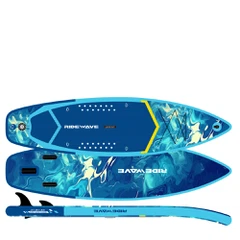
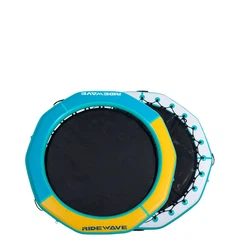
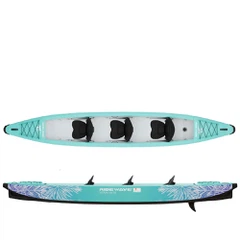
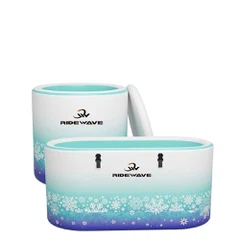
In today's competitive watersports industry, inflatable stand-up paddle boards (SUPs) have become one of the fastest-growing categories in outdoor recreation. As global demand rises, B2B buyers, distributors, and private-label brands are constantly comparing suppliers in China and beyond to find the most cost-effective deals. Yet, in the pursuit of lower prices, many businesses make a crucial mistake-they overlook the questions that truly define long-term value.
A lower price tag does not always equal higher profit. Quality, materials, design, certifications, and after-sales support all influence your bottom line. In this article, we'll explore the top five overlooked questions that every wholesale SUP buyer should ask before signing a purchase order. Whether you're an importer, retailer, or growing paddle board brand, understanding these key considerations will help you make smarter sourcing decisions and build stronger supplier partnerships.
1. What Is Included in the Quoted Price-And What's Not?
At first glance, one supplier's quotation might look far cheaper than another's-but hidden costs are often buried beneath the surface. Many buyers overlook the details behind the unit price and fail to clarify what's included in the quotation.
When comparing inflatable SUP factory prices, always request a clear itemized quotation that specifies:
- The exact model specifications (size, thickness, materials used)
- Whether accessories such as paddles, pumps, fins, and leashes are included
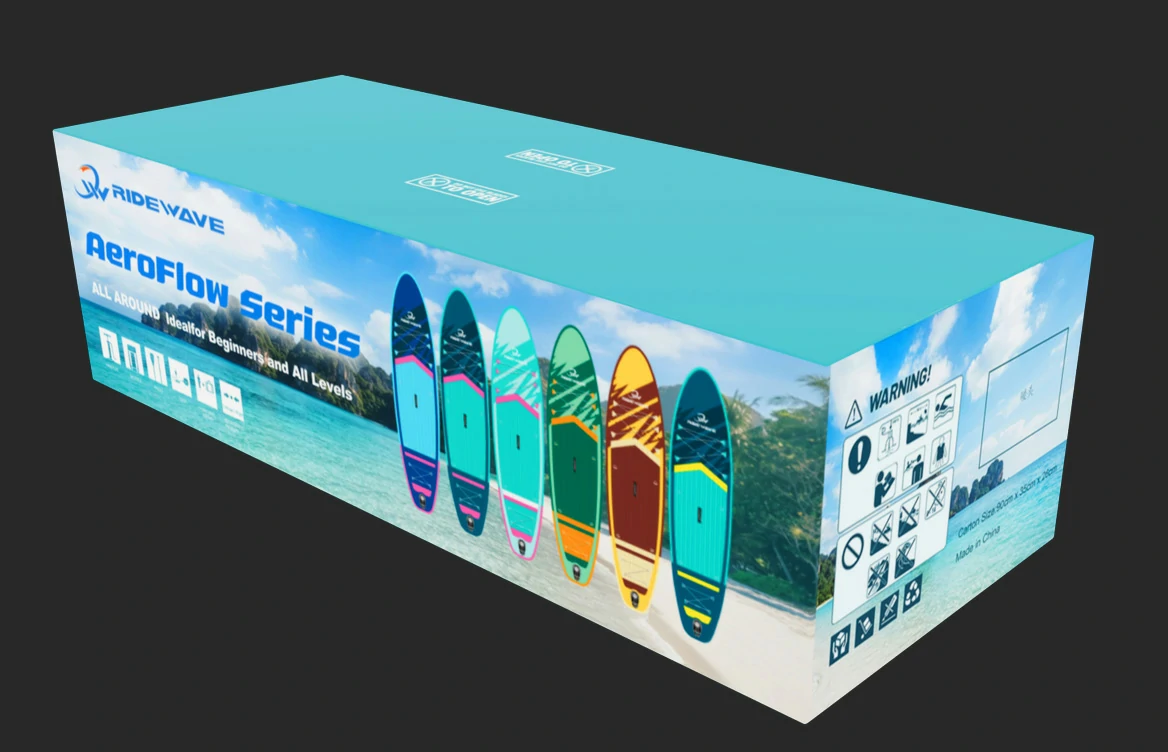
- The packaging type (color box, plain box, or customized packaging)
- Printing or logo customization fees
- Shipping terms (EXW, FOB, or CIF)
A supplier might quote a lower EXW price (factory-only), but another may provide a FOB quotation including port delivery, export clearance, and packaging-making it seem more expensive when it's actually more comprehensive.
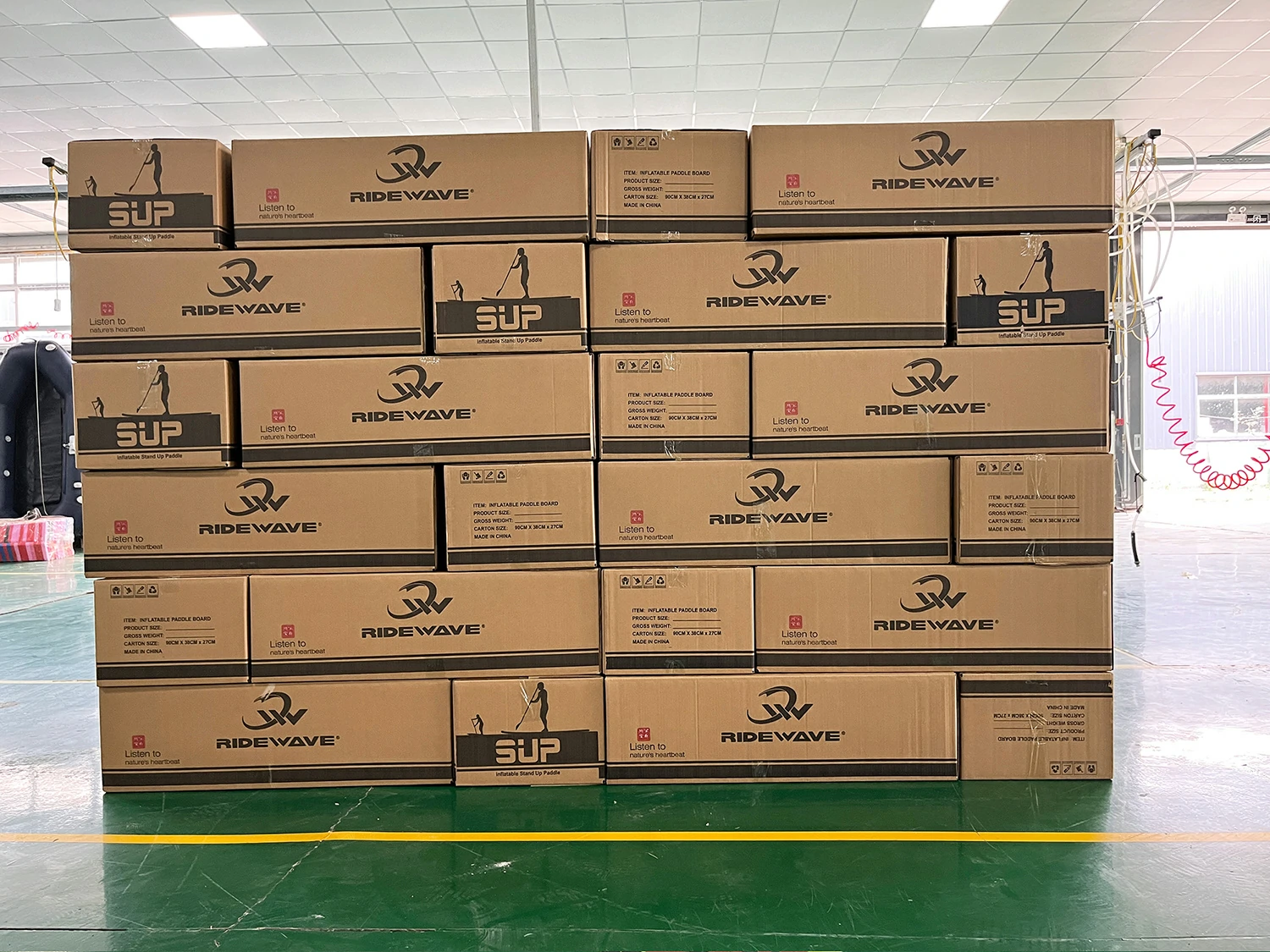
Many OEM SUP manufacturers in China provide flexible options, but buyers should confirm whether the base price includes standard accessories and branding. For example, Ridewave offers full-package pricing that includes essential accessories, custom packaging, and professional design support. This helps buyers calculate a more realistic landed cost rather than chasing misleadingly low factory quotes.
The takeaway? Always compare total value, not just the headline price.
2. What Type of Materials and Construction Methods Are Used?
The construction technology behind an inflatable SUP directly affects its durability, rigidity, and safety-yet this is often one of the most misunderstood aspects of SUP pricing.
Many first-time B2B buyers assume that all drop-stitch materials are the same. In reality, the type, density, and lamination process can vary dramatically between factories. High-end boards use fusion drop-stitch or double-layer PVC for better stiffness and longevity, while cheaper boards might rely on single-layer materials that flex easily or degrade under UV exposure.
Here are some crucial questions to ask:
- What type of drop-stitch fabric is used (fusion, woven, or knitted)?
- How many PVC layers are applied on each side of the core?
- Are the seams heat-welded or glued?
- What PSI pressure is recommended for inflation?
Reliable suppliers like Ridewave invest in multi-layer fusion technology, precision heat-welding, and strict material inspection. These factors add slightly to the cost per unit but dramatically extend product lifespan-resulting in fewer returns and happier customers.
When comparing quotes between SUP factories, always examine how the manufacturing technology impacts the board's performance. Paying slightly more for advanced materials often yields higher profits through improved durability, brand reputation, and customer retention.
3. What Quality Control and Testing Procedures Are in Place?
Quality control is one of the most overlooked areas in B2B purchasing decisions-yet it's the difference between a brand that thrives and one that drowns in warranty claims.
Many buyers assume that all Chinese SUP manufacturers conduct similar quality checks, but in reality, QC standards vary widely. Some factories rely on simple air-leak tests, while others follow a comprehensive, multi-stage inspection process that includes:
- Raw material inspection (PVC, EVA, valves, and accessories)
- Drop-stitch density testing
- Pressure retention testing at 15–20 PSI for 48 hours
- Adhesion and seam strength evaluation
- Final product visual inspection and performance check
Ridewave, for example, maintains an in-house QC department that inspects every batch before shipment. Each board undergoes inflation testing and visual assessment to ensure no air leaks or surface defects. Boards are only cleared for export after passing all performance benchmarks.
Without thorough quality control, even a small manufacturing inconsistency can lead to costly returns or negative brand reviews. When evaluating suppliers, ask for their full QC checklist, any ISO or CE certifications, and sample inspection reports.
Remember: consistent quality builds trust-and trust builds your brand.
4. How Do Production Capacity and Lead Times Affect Supply Stability?
Another commonly ignored factor in pricing comparisons is production capacity and lead time reliability. A factory offering the lowest price may not be capable of meeting your delivery schedule during peak season.
Ask your supplier:
- What is your monthly production capacity for inflatable SUPs?
- How many production lines or workers do you have?
- What's your average lead time during the high season (May–August)?
- How do you handle urgent or bulk OEM orders?
Reliable factories manage production planning with precision and transparency. They provide realistic delivery timelines and update you proactively about order status.
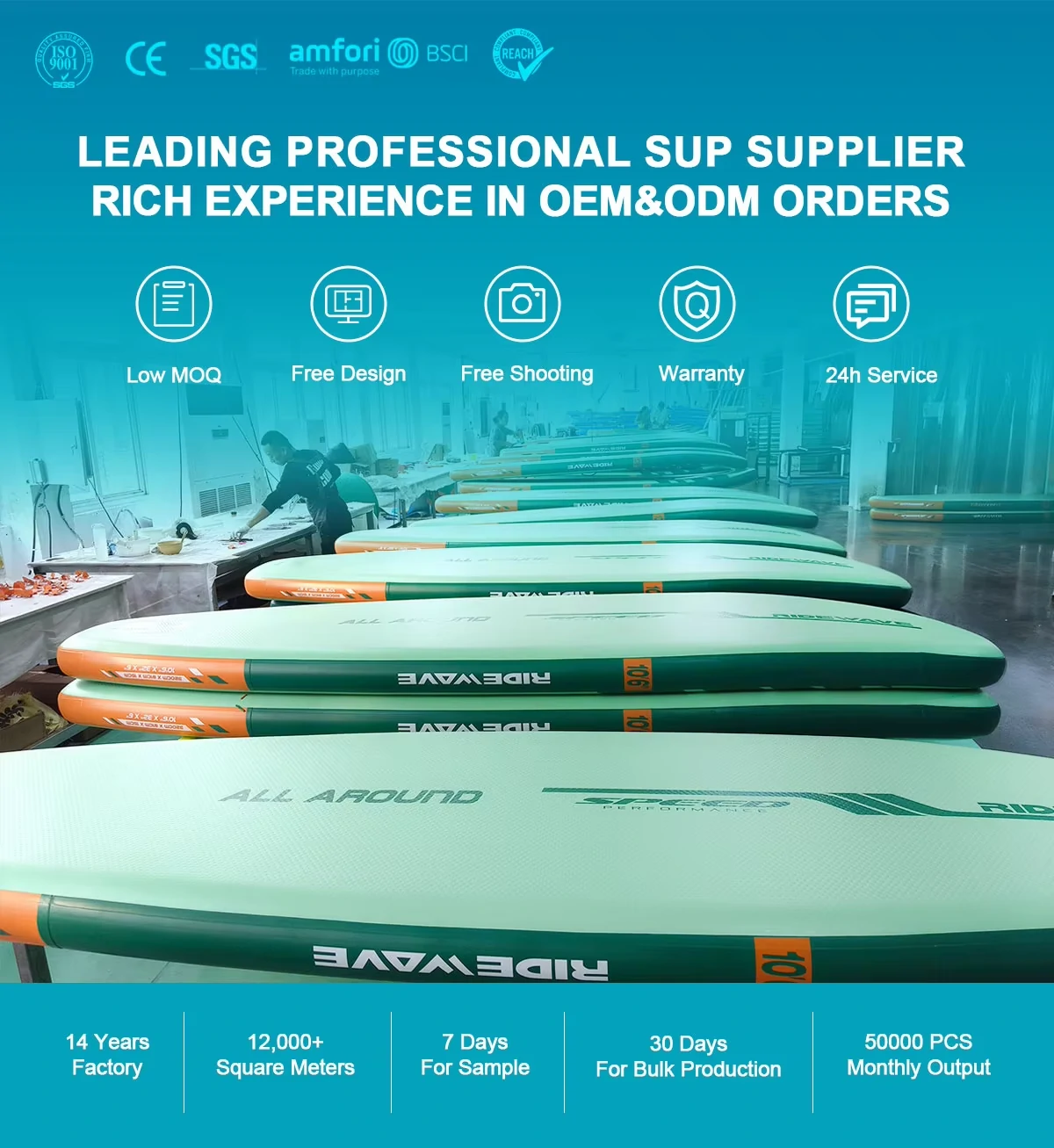
Ridewave's SUP manufacturing facilities are equipped with multiple production lines, experienced technicians, and automated welding systems to ensure stable output. This allows them to balance bulk orders while maintaining quality consistency.
In the long run, choosing a supplier that can consistently meet your timelines saves you from stock shortages, canceled retail orders, and disappointed distributors.
5. What Kind of After-Sales Support and Communication Can You Expect?
Many buyers focus so much on the manufacturing cost that they neglect the post-sale relationship, which can make or break long-term cooperation. After-sales support reflects a supplier's commitment to reliability and accountability.
Key factors to evaluate include:
- Warranty coverage (duration, terms, and repair/replacement policies)
- Responsiveness to issues or feedback
- Spare parts availability (valves, fins, pumps, etc.)
- Support for marketing assets such as product photos, instruction manuals, or custom branding guides
Factories like Ridewave distinguish themselves by offering full-service support beyond production. This includes assistance with brand design, logistics coordination, marketing content, and warranty service. They act as strategic partners rather than one-time suppliers.
In contrast, suppliers who disappear after shipment can leave your team struggling to resolve customer complaints or defective product cases. In today's competitive SUP market, strong after-sales communication can elevate your brand's reputation and customer loyalty far beyond pricing differences.
Beyond Price: Building Long-Term Value Through Partnership
When sourcing inflatable paddle boards wholesale, price will always be a deciding factor-but it should never be the only one. The most successful B2B buyers understand that true profitability comes from consistent quality, responsive communication, and shared growth with reliable manufacturers.
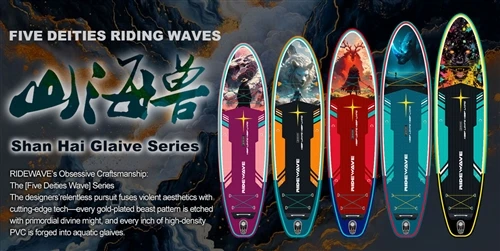
Factories like Ridewave combine advanced OEM & ODM capabilities with strict quality control and design innovation, helping global partners create unique SUP product lines that stand out in both performance and aesthetics. Whether you are a small distributor or an established outdoor brand, choosing the right manufacturing partner allows you to scale sustainably and differentiate your brand in an increasingly crowded market.

Conclusion
When comparing SUP prices across suppliers, don't just look at the numbers-ask the right questions. Understanding what's included in the cost, what materials are used, how quality is managed, how production timelines are handled, and how after-sales support is delivered will give you a full picture of the supplier's true value.
At Ridewave, we believe that every partnership begins with transparency, quality, and trust. Our mission is to help global B2B clients source high-performance inflatable paddle boards that meet their technical, aesthetic, and commercial goals.
Because in the SUP industry, it's not about finding the cheapest option-it's about finding the right partner.