
Introduction: Why Manufacturing Processes Matter for Inflatable SUP Durability
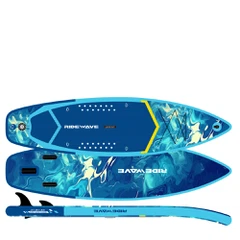
In the inflatable stand-up paddle board (SUP) industry, the manufacturing process plays a critical role in determining product performance, durability, and long-term reliability. Panel sealing, gluing, and fusion technologies are among the most important techniques used to bond the drop-stitch core to the outer PVC layers. Each method impacts the board's strength, weight, surface consistency, and lifespan differently. Understanding these differences is crucial for manufacturers, distributors, rental operators, and OEM partners who need to make informed decisions about procurement, production, and quality assurance. This article explores the characteristics of each process and evaluates their impact on durability, portability, and production consistency.
Panel Sealing: Overview and Material Characteristics
Panel sealing is a fundamental process used to ensure airtightness and structural integrity in inflatable SUPs. Typically, this involves heat sealing or airtight sealing methods to bond the drop-stitch core and outer PVC layers tightly. Heat, pressure, or vacuum-assisted techniques are applied to create a firm bond that maintains the board's shape and performance when fully inflated.
Key advantages of panel sealing include:
- Enhanced airtightness: Prevents air leakage, maintaining board stability over long periods.
- Improved structural rigidity: Provides uniform stress distribution, enhancing resistance to bending and bulging.
- Consistent surface finish: Results in a smooth, visually appealing exterior that improves user perception and product quality.
Panel sealing is commonly used for mid- to high-end boards, balancing performance, durability, and cost-effectiveness. For rental or high-frequency use scenarios, panel sealing reduces maintenance needs and prolongs board life.
Gluing: Overview and Material Characteristics
Gluing is a traditional bonding method that uses adhesives or resins at room temperature to attach the board's layers. Compared to panel sealing and fusion technologies, gluing requires less specialized equipment and is simpler to implement, making it ideal for entry-level or cost-sensitive boards.
Characteristics of gluing include:
- Cost-effective: Lower production costs make it suitable for budget-friendly or entry-level SUPs.
- Slightly heavier construction: Adhesive layers add weight, which can impact transport and handling.
- Potential surface and thickness variation: Manual application may result in minor inconsistencies or visible imperfections.
While glued boards perform adequately for casual use, their durability and long-term airtightness are generally lower than those of panel-sealed or fusion boards. Factors such as adhesive aging, temperature, and humidity can influence performance over time.
Fusion Technologies: Overview and Material Characteristics
Fusion technologies, such as thermal fusion or heat-laminated processes, bond the core and outer layers at a molecular level using heat and pressure. This method reduces or eliminates the need for adhesives, resulting in lighter, more uniform boards. Fusion technology is widely used for high-end SUPs and professional rental boards.
Advantages of fusion technology include:
- Superior bonding strength: Molecular-level fusion resists delamination and ensures long-lasting structural integrity.
- Lightweight construction: Eliminating adhesive layers reduces overall weight, improving portability and handling.
- High consistency: Automated processes minimize batch-to-batch variability, delivering predictable performance for every board.
- Enhanced durability: Boards withstand prolonged exposure to sun, saltwater, and temperature fluctuations without degradation.
Fusion technology is particularly suitable for professional or commercial rental operations where frequent use demands maximum durability and minimal maintenance.
Durability Comparison: How Processes Affect Board Lifespan
Durability is one of the most critical factors for SUP buyers and operators. Panel sealing and fusion technologies offer superior structural support and airtightness, allowing boards to maintain shape and performance even under high pressure and repeated use. Glued boards, while initially functional, may experience localized delamination or air leakage over time due to adhesive aging or inconsistent application.
In practical scenarios:
- High-frequency use (rental fleets, water sports schools): Fusion boards provide the highest durability and lowest maintenance requirements.
- Moderate use (enthusiast paddlers, recreational users): Panel-sealed boards offer reliable performance with good cost-effectiveness.
- Light use (occasional leisure paddling, budget-conscious buyers): Glued boards are suitable but may require more careful storage and maintenance.
The differences in durability directly influence maintenance costs, customer satisfaction, and long-term brand reputation, making process selection a key consideration for B2B buyers.
Weight and Portability: How Processes Affect User Experience
Board weight affects both user convenience and logistics efficiency. Fusion technology boards, with minimal or no adhesive layers, are typically lighter and easier to carry, store, and transport. Panel-sealed boards maintain good airtightness and structure but may have slightly thicker sealed layers, adding marginal weight. Glued boards are generally the heaviest due to adhesive layers and manual application inconsistencies.
For commercial operations, transport efficiency and storage space are important considerations. Lighter boards reduce shipping costs, simplify handling for rental operators, and improve the overall user experience, especially for high-end or professional-level boards.
Production Consistency and Quality Control
Consistency in manufacturing is critical for distributors, OEM partners, and rental operators. Fusion technologies, with automated production equipment, ensure uniform thickness, bonding strength, and surface quality across every board. Panel sealing, when automated, also delivers stable results but may be slightly less precise than fusion methods. Gluing relies heavily on manual labor, introducing the potential for batch-to-batch variation and increasing the need for quality inspections.
High consistency reduces the likelihood of defects, minimizes returns, and enhances brand reputation. For B2B buyers, understanding the differences in process consistency is essential to managing inventory, ensuring product reliability, and maintaining customer satisfaction.
Conclusion: Choosing the Right Process for Your Market
Selecting the appropriate manufacturing process depends on target market, product pricing, and intended use. Fusion technology is ideal for high-end, professional, or rental markets, providing unmatched durability, lightweight performance, and consistency. Panel sealing offers a balance of durability and cost, making it suitable for mid-to-high-end boards. Gluing is economical and suitable for entry-level or budget-conscious segments, though it requires more careful maintenance.
For B2B buyers, evaluating usage frequency, shipping and storage requirements, and customer expectations is essential for selecting the right process. By understanding the advantages and limitations of panel sealing, gluing, and fusion technologies, businesses can make informed decisions that optimize product performance, reduce maintenance costs, and ensure long-term value for end users.