
Understanding OEM and ODM in the Inflatable Paddle Board Industry
In today's highly competitive inflatable paddle board market, choosing the right manufacturing model is no longer a simple operational decision-it is a strategic decision that directly affects brand growth. For paddle board brands, distributors, rental operators, and emerging private labels, the choice between OEM and ODM has a direct impact on product differentiation, time-to-market, cost structure, and long-term scalability.
As global demand for inflatable paddle boards continues to grow across Europe, North America, and Australia, B2B buyers are becoming more sophisticated. They no longer focus solely on price. Instead, they evaluate manufacturing partners based on design capability, customization depth, production stability, and long-term supply reliability. This shift makes understanding OEM vs ODM paddle board manufacturing essential.
OEM (Original Equipment Manufacturing) and ODM (Original Design Manufacturing) represent two fundamentally different production strategies. Each model supports different business goals, risk levels, and growth stages. Choosing the wrong model can slow down launches and limit competitiveness, while the right choice can significantly improve efficiency and profitability.
Brands like Ridewave successfully support both OEM and ODM paddle board programs for global B2B clients. Backed by Hebei Dashuai Outdoor Products Co., Ltd., Ridewave integrates large-scale manufacturing, proven quality control systems, and export-ready compliance, allowing buyers to select the most suitable manufacturing path with confidence.
This guide provides a practical, decision-oriented comparison of OEM vs ODM inflatable paddle boards. Rather than theory, it explains how each model works in real production, what it means for your business, and how to choose the right approach for your paddle board brand.
What OEM Paddle Board Manufacturing Is

OEM paddle board manufacturing refers to a production model in which the buyer provides the complete product design and technical specifications, while the manufacturer produces the inflatable paddle boards strictly according to those requirements. Under this model, the brand retains full ownership of the paddle board design and intellectual property.
In the inflatable paddle board industry, OEM usually means the buyer has already defined the board shape, dimensions, materials, internal drop-stitch structure, and performance targets. The manufacturer focuses on execution-material sourcing, production management, assembly, and quality consistency.
OEM paddle board manufacturing is typically chosen by established brands with strong R&D capabilities. These brands prioritize design exclusivity, performance differentiation, and long-term product consistency, rather than speed or short-term cost savings.
At Hebei Dashuai Outdoor Products Co., Ltd., OEM paddle board projects follow structured workflows, including technical drawing review, sample validation, pilot runs, and mass production control. Through Ridewave, OEM clients also receive engineering feedback and production optimization suggestions, while maintaining complete design ownership.
However, OEM inflatable paddle board manufacturing requires higher upfront investment and longer development cycles. Brands must manage design costs, sampling revisions, and extended lead times. As a result, OEM paddle board manufacturing is best suited for brands with stable order volumes and long-term product planning.
What ODM Paddle Board Manufacturing Is
ODM paddle board manufacturing is a model where the manufacturer develops and owns the core paddle board design, while the buyer customizes the product for branding and market positioning. This includes graphics, colors, accessories, and packaging.
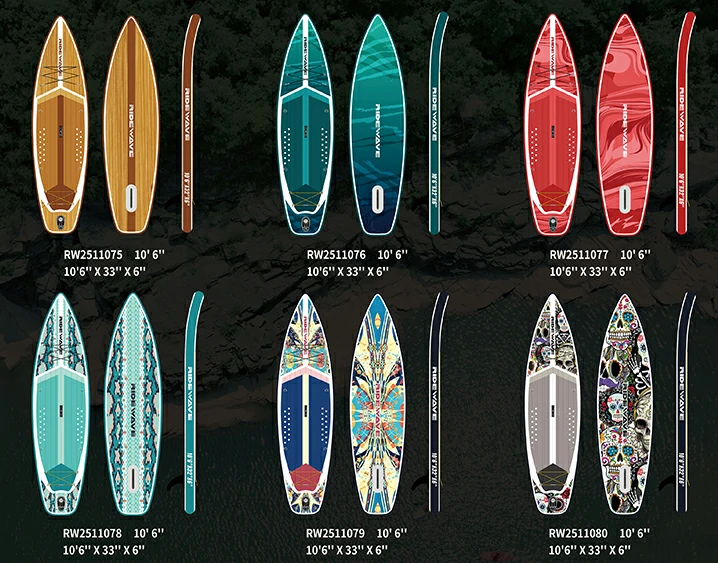
In an ODM paddle board system, manufacturers maintain a library of proven board platforms that have already been engineered, tested, and validated for mass production. Buyers select from these models and apply their brand identity.
This approach significantly reduces development time, upfront cost, and technical risk. Instead of starting from scratch, brands can launch inflatable paddle boards that are already optimized for stability, durability, and manufacturability.
Ridewave's ODM paddle board solutions are supported by Hebei Dashuai Outdoor Products Co., Ltd.'s large-scale production capacity. Each ODM platform is tested for PSI tolerance, load capacity, seam strength, and real-world use scenarios before being offered to B2B clients.
ODM does not mean lack of differentiation. Advanced ODM paddle board programs allow extensive customization in graphics, deck pad layout, accessory kits, and packaging, offering a strong balance between uniqueness and efficiency.

OEM vs ODM Paddle Board Key Differences

The core difference between OEM and ODM paddle board manufacturing is control versus efficiency. OEM prioritizes full design ownership and exclusivity, while ODM focuses on speed, cost control, and reduced complexity.
OEM paddle board buyers control every technical detail, while ODM buyers rely on pre-engineered, market-proven designs. This directly affects development timelines and operational risk.
OEM inflatable paddle boards typically require longer development cycles and higher upfront investment, whereas ODM paddle boards enable faster market entry and lower initial risk.
Based on Ridewave's project data, many brands adopt a hybrid strategy-launching with ODM paddle board models first, then transitioning successful products into OEM development for deeper differentiation.
Paddle Board Design Ownership Comparison
Design ownership is one of the most critical decision factors when comparing OEM and ODM paddle board manufacturing. It directly affects brand differentiation, long-term competitiveness, and intellectual property control.
In OEM paddle board manufacturing, the brand owns 100% of the design and structure. This includes board shape, internal construction, performance tuning, and any proprietary features. OEM is therefore ideal for brands that rely on unique performance positioning or patented design elements.
In contrast, ODM paddle board manufacturing is based on manufacturer-owned core designs. Buyers customize branding and appearance, but the fundamental structure remains shared across clients. This significantly reduces development risk while sacrificing exclusivity.
Ridewave helps B2B buyers clearly assess whether design ownership is a strategic necessity or an operational burden. Supported by Hebei Dashuai Outdoor Products Co., Ltd., Ridewave enables brands to choose full OEM ownership or leverage mature ODM designs depending on market goals.

Paddle Board Customization Options

Customization is often misunderstood in OEM vs ODM paddle board discussions. The key difference is not whether customization is possible, but how deep and costly that customization is.
OEM paddle board customization allows full structural and functional freedom, including board dimensions, materials, internal reinforcement, and performance tuning. However, this depth comes with longer development cycles and higher engineering cost.
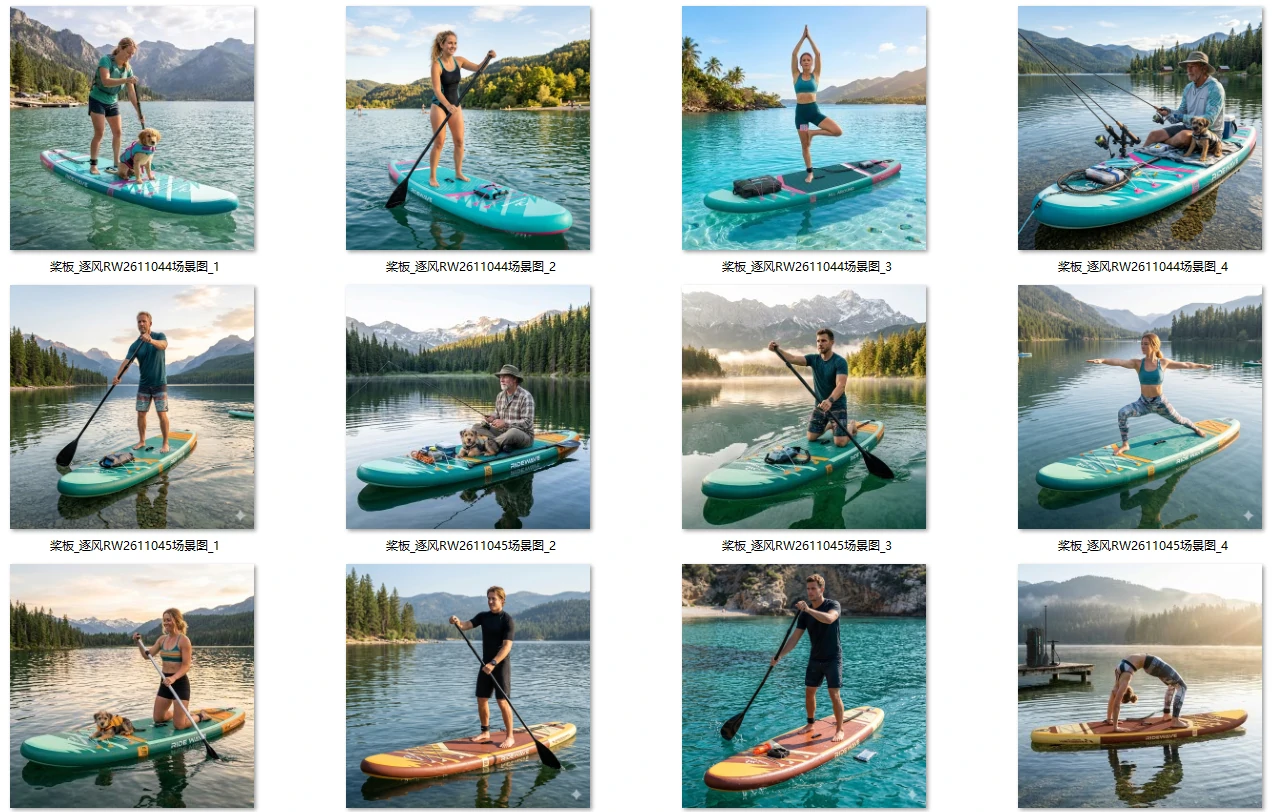
ODM paddle board customization focuses on market-facing elements, such as graphics, colorways, deck pad layouts, accessories, and packaging. For many B2B buyers, this level of customization is sufficient to build a recognizable and competitive brand.
Ridewave's ODM paddle board programs are designed to maximize visual differentiation without compromising production efficiency, offering an optimal balance for distributors and rental-focused buyers.
Paddle Board Development Speed and Time-to-Market
Time-to-market is a decisive factor for many paddle board brands, especially those operating in seasonal or trend-driven markets.
OEM paddle board development typically involves design finalization, multiple sampling rounds, structural testing, and production validation. This process often takes several months, making OEM less suitable for fast market entry.
ODM paddle board manufacturing dramatically shortens this timeline. Since the core design is already validated, brands can move directly into branding, sampling confirmation, and mass production, often launching within a single sales season.
Ridewave's ODM paddle board platforms, produced by Hebei Dashuai Outdoor Products Co., Ltd., allow B2B buyers to respond quickly to market demand, reduce missed selling windows, and improve cash flow efficiency.
For many brands, speed is not just convenience-it is a competitive advantage.

Paddle Board MOQ and Cost Structure

For B2B buyers, minimum order quantity (MOQ) and cost structure are often the first considerations when choosing between OEM and ODM paddle board manufacturing.
In OEM paddle board projects, MOQs are typically higher because the manufacturer invests in custom molds, materials, and engineering resources for each unique design. This higher entry requirement can increase initial cash outlay and limit flexibility for smaller brands or seasonal businesses.
ODM paddle board manufacturing significantly reduces MOQ requirements. Since the core design and tooling are already established, buyers can order smaller batches, which lowers financial risk and inventory pressure. This is ideal for brands testing new markets or launching multiple product lines simultaneously.
Ridewave, backed by Hebei Dashuai Outdoor Products Co., Ltd., offers flexible MOQ options for both OEM and ODM. For ODM, B2B buyers can start with as few as 50–100 units per model, enabling rapid testing and market entry. For OEM, Ridewave provides scalable production solutions that balance custom design needs with cost optimization.
Cost structure also varies by model. OEM paddle board projects carry higher upfront engineering and production costs but allow long-term differentiation. ODM paddle boards reduce initial investment, allowing brands to allocate funds toward branding, marketing, and distribution.
For many emerging brands, leveraging ODM paddle board solutions with flexible MOQs is a strategic way to minimize risk while validating product-market fit. Once a product proves successful, brands can transition to OEM for deeper differentiation.
Paddle Board Quality Control Responsibilities
Quality control is a crucial consideration in both OEM and ODM paddle board manufacturing. It ensures product safety, customer satisfaction, and brand reputation.
In OEM projects, the buyer often owns the responsibility for quality standards, providing specifications, test methods, and acceptance criteria. The manufacturer executes production according to these guidelines.
In ODM paddle board projects, the manufacturer provides a pre-validated quality standard. Buyers benefit from proven stability and durability of existing designs, while still having the option for custom inspections or third-party testing.
Ridewave works closely with B2B buyers to establish clear QC protocols. With Hebei Dashuai Outdoor Products Co., Ltd., Ridewave ensures every paddle board meets international standards (CE, SGS), regardless of OEM or ODM pathway.

Paddle Board Branding and Market Flexibility

Branding flexibility is another factor influencing OEM vs ODM decisions. OEM paddle boards allow complete branding freedom, from product features to packaging and promotional strategies.
ODM paddle boards offer flexibility mainly in visual branding and accessory customization, which is often sufficient for B2B clients launching regional or seasonal products.
Ridewave's ODM programs balance speed, cost, and visual uniqueness, enabling brands to maintain a strong identity without extensive R&D investment. Hebei Dashuai Outdoor Products Co., Ltd. supports these operations with efficient production lines and supply chain stability.
How to Choose the Right Paddle Board Manufacturing Model
Choosing between OEM and ODM paddle board manufacturing requires a strategic evaluation of your brand's goals, budget, and market timing.
Step 1: Assess Your Design Needs
-
If your brand relies on unique performance features, patented board designs, or proprietary structures, OEM is the ideal choice.
-
If your focus is speed-to-market, lower upfront cost, or testing multiple product lines, ODM provides flexibility.
Step 2: Evaluate Development Timeline and Market Windows
-
OEM projects often require several months of design validation and sampling. Suitable for long-term launches.
-
ODM allows rapid market entry, ideal for seasonal demand, rental fleets, or test markets.
Step 3: Consider MOQ and Cash Flow
-
OEM paddle boards usually have higher MOQs and upfront investment.
-
ODM reduces MOQ significantly, allowing brands to minimize inventory risk while testing new products.
Step 4: Factor in Branding and Differentiation
-
OEM ensures full brand ownership and unique product identity.
-
ODM provides sufficient branding flexibility through graphics, deck pads, accessories, and packaging.
Step 5: Partner with a Trusted Manufacturer
-
Ridewave, in cooperation with Hebei Dashuai Outdoor Products Co., Ltd., supports both OEM and ODM programs.
-
Ridewave offers engineering advice, quality assurance, and flexible production options, ensuring your brand makes the right strategic choice.
By carefully considering design ownership, development speed, MOQ, cost structure, and branding flexibility, brands can select a paddle board manufacturing model that aligns with both short-term operational goals and long-term market strategy.

Other Blog Recommendations Introduction
For B2B buyers exploring paddle board manufacturing, learning from related topics can further improve decision-making and operational efficiency. Below are recommended reads to complement your OEM vs ODM knowledge:
"How to Choose the Right Manufacturer: 10 Key Questions Every B2B Buyer Must Ask"
"Low MOQ, Fast Launch: Why B2B Brands Choose Ridewave to Get Started"
"How to Customize Your SUP Brand: Colors, Prints, Packaging & Accessories That Sell"
Exploring these blogs can help you optimize product strategy, reduce risk, and maximize profitability when selecting OEM or ODM inflatable paddle boards.