
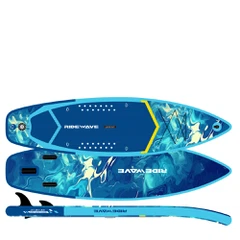
Inflatable stand-up paddleboards (iSUPs) are more than just recreational gear-they are a product of sophisticated engineering and precise manufacturing. From selecting the right polymers to ensuring airtight construction and structural integrity, every step of the production process influences the board's durability, stability, and performance.
This article explores the entire manufacturing workflow, covering raw material selection, pressing techniques, panel assembly, durability challenges, and quality control. Each stage demonstrates how modern engineering ensures that inflatable SUPs meet both consumer expectations and industry standards.
This article contains the following content:
1. From Raw Materials to Finished Product: A Complete Analysis of the Inflatable Paddleboard Production Process
2. Differences Between Hot Pressing and Cold Pressing Processes: Comparison of Strength, Weight, and Consistency
3. Panel Sealing, Gluing, and Fusion Technologies: How Processes Affect Durability
4. Technical Roots and Solutions for Color Fading, Delamination, and Air Leakage Issues
5. QA Quality Control Process: How Top-Tier Factories Ensure Every SUP Passes Testing
1. From Raw Materials to Finished Product: A Complete Analysis of the Inflatable Paddleboard Production Process
The foundation of every iSUP begins with materials. High-quality SUPs rely on:
- Drop-stitch fabrics: Thousands of polyester threads connect the top and bottom layers, maintaining the board's shape under high pressure. The density of these threads directly affects stiffness and weight.
- PVC layers: The air-holding PVC skins define durability and surface strength. Manufacturers may use single-layer, reinforced single-layer, or double-layer PVC depending on target market performance.
- Adhesives and coatings: Proper application of glue or heat-fused bonding ensures airtightness without adding excessive weight.
- EVA deck pads and accessory mounts: Surface finishes and component integration affect user comfort and utility.
Raw materials are selected not only for their mechanical properties but also for their resistance to UV light, temperature fluctuations, and long-term wear. Proper handling during storage-avoiding moisture, extreme heat, and contamination-is essential to maintaining material integrity.
The production process begins with precise cutting of drop-stitch fabric and PVC layers, followed by panel assembly and reinforcement placement, all while ensuring symmetry and proper alignment. These initial steps set the stage for a board that performs consistently on the water.
2. Differences Between Hot Pressing and Cold Pressing Processes: Comparison of Strength, Weight, and Consistency
Once panels are cut, bonding them requires careful selection of pressing techniques:
Hot Pressing
Hot pressing uses heat and pressure to fuse PVC layers together. Advantages include:
- Stronger bonds due to molecular fusion
- Consistent thickness and rigidity across the board
- Reduced reliance on adhesives, minimizing weight and potential aging issues
However, hot pressing requires precise temperature control. Excess heat can damage drop-stitch threads or create weak spots, while insufficient heat reduces bond strength.
Cold Pressing
Cold pressing relies on adhesive bonding at ambient temperatures:
- Lower equipment costs
- Reduced risk of thermal damage
- Flexible for small-scale or custom production
Drawbacks include:
- Potential inconsistency in thickness
- Higher material weight due to adhesive layers
- Greater variability in long-term durability
Choosing between hot and cold pressing depends on the board's target performance, weight limits, and production scale. Many modern mid-to-high-end boards favor hot pressing to achieve a lightweight yet rigid structure.
3. Panel Sealing, Gluing, and Fusion Technologies: How Processes Affect Durability
After pressing, panels are joined and sealed. The methods used here directly impact the board's durability:
Panel Sealing
- Heat welding provides airtight, robust seams
- Proper seam alignment prevents sagging and uneven inflation
Gluing
- Traditionally used with cold pressing
- Excess glue can create uneven surfaces or add weight
- Insufficient glue can cause delamination or leaks
Fusion Technology
- Modern fusion methods combine heat and pressure for a seamless bond
- Ensures uniform stiffness across the board
- Reduces long-term maintenance issues and enhances structural consistency
Durability depends on attention to detail. Small errors during this stage-such as misaligned panels, insufficient pressure, or uneven heat application-can compromise board lifespan and safety.
4. Technical Roots and Solutions for Color Fading, Delamination, and Air Leakage Issues
Even the best materials and pressing techniques can face technical challenges:
Color Fading
- Caused by prolonged UV exposure or low-quality pigments
- Solutions include UV-stabilized inks, protective coatings, and proper storage
Delamination
- Results from poor adhesion, uneven heat, or air pockets
- Prevented through strict pressing controls and high-quality adhesive/fusion technology
Air Leakage
- Common around valves, seams, or accessory mounts
- Solved by reinforced valve installation, heat-welded seams, and quality control testing
Understanding the root causes allows manufacturers to apply preventive measures, ensuring the finished board remains visually appealing, structurally sound, and airtight for years.
5. QA Quality Control Process: How Top-Tier Factories Ensure Every SUP Passes Testing
Quality assurance is the final and arguably most critical stage in manufacturing. Key steps include:
Pressure Testing
- Inflating boards to target PSI (usually 12–20)
- Checking for leaks, sagging, or seam separation
Structural Inspection
- Verifying panel alignment and adhesion
- Ensuring drop-stitch integrity
- Testing rails, handles, and accessory mounts for mechanical strength
Visual and Functional Checks
- Inspecting EVA pads, graphics, and finishing
- Confirming the correct installation of valves and fins
- Simulating water conditions to verify board performance
Top-tier factories implement multi-stage QA, combining automated inspections, manual checks, and functional testing. This ensures every SUP leaving the facility meets both industry standards and customer expectations.
Conclusion
The production of inflatable SUPs is a multi-stage process that requires careful attention to materials, pressing technology, panel assembly, sealing methods, and quality assurance. Each step-from raw material selection to final packaging-affects the board's durability, stiffness, performance, and user experience.
By understanding these processes, brands, distributors, and buyers can make informed decisions, ensuring the iSUPs they produce or sell are reliable, high-performing, and capable of withstanding years of recreational and professional use.
The combination of modern materials, precise manufacturing techniques, and rigorous quality control continues to push the industry forward, providing paddlers with inflatable SUPs that are lightweight, strong, and ready for any adventure.