
Introduction: The Expanding Global B2B Inflatable SUP Market
The global inflatable paddle board (SUP) market has witnessed remarkable growth in recent years, driven by a combination of increasing consumer interest in recreational water sports and the rising demand from B2B buyers, including importers, distributors, retailers, and OEM/ODM partners. Unlike traditional hardboards, inflatable SUPs are lightweight, durable, portable, and easy to store, making them particularly attractive to businesses that need high-volume, market-ready products for distribution across diverse markets.
B2B buyers face multiple challenges when sourcing inflatable SUPs: ensuring consistent quality, structural integrity, and long-term durability; meeting international safety and regulatory standards; maintaining cost efficiency across large shipments; and providing customization options to appeal to different customer segments. These challenges make it crucial for buyers to partner with suppliers that can deliver high-performance, reliable, and scalable products.
In this article, we explore five key trends driving B2B demand for inflatable SUPs worldwide. By understanding these trends, distributors, importers, and OEM/ODM clients can make strategic sourcing decisions, optimize their supply chains, and capitalize on emerging market opportunities. The five trends include:
- Technological Innovation and Fusion Construction
- Sustainability and Eco-Friendly Products
- Versatile Product Lines and Customization
- Global Supply Chain Expansion
- Growth of Rental and Direct-to-Consumer Channels
These trends not only highlight the factors shaping demand but also provide insights into how Ridewave and other leading suppliers are helping B2B buyers navigate the competitive inflatable SUP landscape.
1. Technological Innovation and Fusion Construction
Fusion Technology Overview
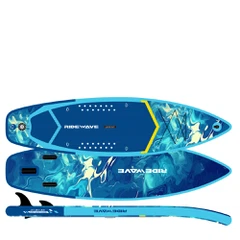
One of the most influential trends in B2B demand is the adoption of fusion technology, a manufacturing process in which PVC layers are heat-bonded directly onto a drop-stitch core. Unlike traditional glued boards, fusion SUPs eliminate the need for adhesive, creating a monolithic structure that is lighter, stiffer, and more durable.
Fusion construction provides a significant advantage for B2B buyers: boards are consistent across large production batches, reducing the risk of defects and warranty claims. For distributors and importers managing high-volume shipments, this consistency is critical, ensuring that every unit meets the performance expectations of retailers and end customers.
Performance Benefits for End Users
Fusion technology contributes to superior stiffness and glide performance, which are key factors in market competitiveness. Boards manufactured using this process resist flexing under pressure, providing better balance, speed, and stability for paddlers of all skill levels.
For B2B buyers supplying rental businesses, resorts, or specialty retailers, fusion boards are particularly appealing because reduced flex improves durability and customer satisfaction. Furthermore, the lightweight construction reduces shipping costs and simplifies handling, which is critical when moving large volumes across international markets.
Advantages for OEM and ODM Partnerships
For OEM and ODM clients, fusion technology offers unmatched customization opportunities. Heat-bonded PVC layers can accommodate high-resolution graphics, custom colors, and branding, all while preserving structural integrity. This allows B2B buyers to offer private-label products tailored to regional preferences or retailer specifications.
Additionally, fusion boards are more resilient to extreme temperatures and UV exposure, ensuring performance in diverse climates. B2B partners can confidently distribute these products worldwide, knowing they meet international quality and durability standards.
2. Sustainability and Eco-Friendly Products
Environmental Responsibility in B2B Sourcing
Sustainability has emerged as a decisive factor in B2B purchasing decisions. Distributors, importers, and OEM/ODM partners are increasingly seeking eco-friendly inflatable SUPs that reduce environmental impact throughout production, usage, and end-of-life disposal.
Fusion technology contributes to sustainability by minimizing adhesive use, reducing harmful emissions and waste. Some suppliers also integrate recycled drop-stitch fabrics and alternative PVC materials, further enhancing the eco-friendly profile of the boards.
Extended Product Lifespan
Durability is inherently linked to sustainability. Boards that withstand repeated use, high inflation pressures, and rough conditions reduce the need for replacements, lowering overall resource consumption. For B2B buyers managing bulk shipments, this translates to fewer returns, lower warranty costs, and higher brand reputation among retailers and end consumers.
Market and Brand Advantages
Distributors and OEM/ODM partners can leverage eco-friendly features as a marketing differentiator, particularly in regions with strong environmental regulations or consumer preference for sustainable products. Certifications such as CE, SGS, and BSCI further assure buyers of compliance with global sustainability and safety standards.
By aligning with environmental trends, B2B buyers not only meet regulatory requirements but also strengthen brand positioning, appeal to eco-conscious retailers, and expand market reach.

3. Versatile Product Lines and Customization
Product Diversity as a Growth Driver
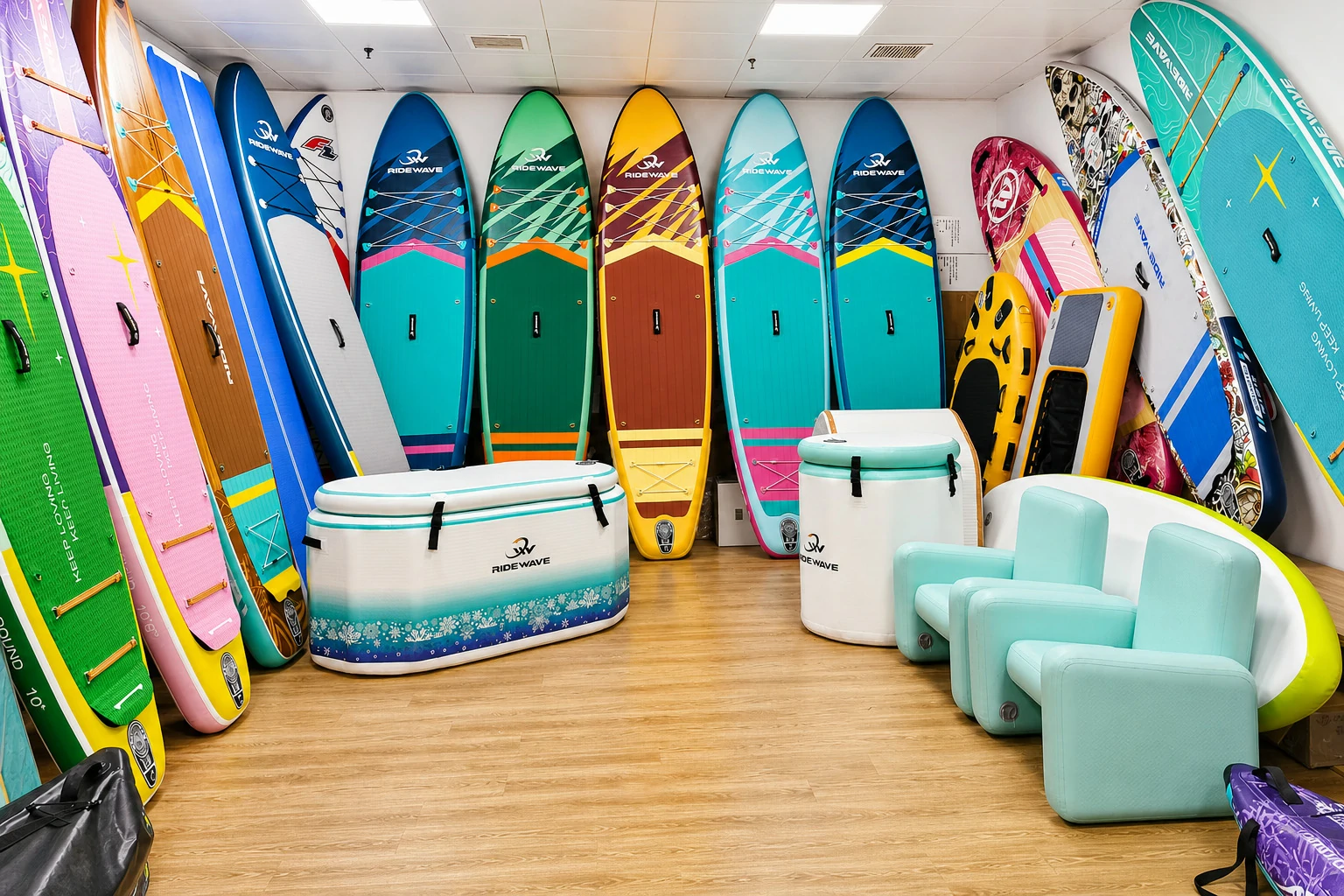
B2B buyers increasingly seek versatile inflatable SUPs that cater to multiple market segments, including recreational users, professional paddlers, rental services, and resort operators. Offering a range of boards allows distributors to maximize sales across diverse customer bases without relying on multiple suppliers.
Key product variations include:
- All-around SUPs for casual paddlers
- Touring SUPs for long-distance paddling and fitness enthusiasts
- Racing SUPs for competitive performance
Customization Opportunities
Fusion technology enables a high degree of OEM/ODM customization:
- Graphics and colors: High-resolution logos, brand colors, and unique designs
- Board shapes: Tailored for specific performance attributes such as speed, stability, or maneuverability
- Accessories integration: Optional fins, deck pads, and carrying straps to enhance value
These customization options allow B2B buyers to create private-label products that resonate with specific retail or rental markets.
Benefits for Market Expansion
By offering a versatile and customizable product range, distributors and importers can penetrate multiple segments simultaneously, reducing inventory risk while maximizing revenue potential. OEM and ODM partners benefit from scalable production that accommodates both standard models and niche variations.

4. Global Supply Chain Expansion
International Sourcing and Distribution
The globalization of the inflatable SUP market has driven B2B demand worldwide. Distributors and importers are sourcing from reliable global manufacturers to satisfy regional demand in North America, Europe, and Asia-Pacific.
Lightweight fusion SUPs reduce shipping costs, making large-scale international orders economically feasible. Suppliers offering OEM and ODM capabilities can accommodate bulk orders while ensuring consistent quality, a major consideration for B2B buyers.
Compliance and Quality Assurance
Global supply chains require adherence to international safety and regulatory standards, including CE, SGS, and BSCI certifications. B2B buyers prioritize suppliers who can demonstrate consistent production quality, efficient logistics, and timely delivery to ensure smooth cross-border distribution.
Logistics Optimization
B2B buyers also focus on warehouse efficiency, packaging optimization, and lead-time reduction. Inflatable SUPs are inherently easier to store and ship than hardboards, but reliable suppliers enhance these advantages through optimized packing, palletization, and freight management, supporting international scale operations.
5. Growth of Rental and Direct-to-Consumer Channels
Rental Market Expansion
The rise of SUP rental businesses-from beach resorts to urban water sport facilities-has increased demand for durable, high-performance boards. Rental operators require boards that withstand repeated use, heavy handling, and varying water conditions, highlighting the advantages of fusion construction and premium materials.
Direct-to-Consumer Channels
E-commerce and D2C sales growth have also influenced B2B purchasing patterns. Retailers sourcing SUPs for online distribution require products that can survive shipping stress, offer attractive branding, and meet end-user performance expectations. Fusion SUPs satisfy these requirements with lightweight portability, rigid structure, and customizable design.
Strategic Implications for B2B Buyers
By supplying boards for rental and D2C channels, distributors and importers can increase sales volume, improve brand recognition, and enhance market reach. OEM and ODM partners can tailor boards to specific user profiles, offering premium or specialized designs that meet market trends efficiently.
For B2B buyers, understanding these trends is crucial for strategic sourcing, market expansion, and brand positioning. By partnering with Ridewave, distributors, importers, and OEM/ODM clients gain access to high-quality, customizable, durable, and market-ready inflatable SUPs designed to meet evolving global demand.
Ridewave's B2B solutions include:
- Advanced fusion technology production
- OEM/ODM customization for private-label branding
- Global logistics and timely delivery
- Rigorous quality assurance and compliance
By aligning with these trends, B2B buyers can capitalize on emerging opportunities, enhance product offerings, reduce operational risk, and strengthen relationships with retailers and consumers worldwide.