


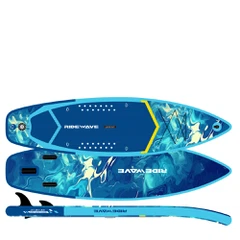

The inflatable paddle board (SUP) industry has rapidly transformed over the past decade, becoming one of the fastest-growing sectors in the global water sports market. With the demand for stand-up paddle boards expanding across North America, Europe, and Asia-Pacific, more businesses are seeking efficient, scalable, and customizable solutions to meet the needs of different consumer groups. This is where OEM (Original Equipment Manufacturer) and ODM (Original Design Manufacturer) services play a vital role.
OEM and ODM are not new concepts in manufacturing, but in the context of the inflatable SUP industry, they have taken on a much deeper significance. Paddle boards are no longer just generic products; they represent a brand's identity, innovation, and quality commitment. Distributors, retailers, and even online sellers want to offer boards that stand out in terms of design, performance, and packaging. By working with experienced OEM and ODM manufacturers, businesses can shorten product development cycles, reduce costs, and bring unique paddle boards to the market faster.
In the SUP industry, OEM generally refers to a manufacturer producing paddle boards based on a client's specific requirements, such as logos, colors, packaging, and sometimes custom materials. ODM, on the other hand, involves a manufacturer not only producing but also designing paddle boards, creating ready-to-sell models that clients can directly brand and distribute. Both models empower companies to capture market opportunities with greater flexibility.
As the inflatable paddle board market continues to expand globally, understanding OEM and ODM becomes essential for brands that wish to stay competitive. Whether you are a distributor exploring private label opportunities, a retailer seeking exclusive designs, or a brand owner aiming for large-scale production, OEM and ODM solutions can help position your SUP business for long-term success.

The Rise of Inflatable Paddle Boards in Global Markets
In recent years, the global watersports industry has witnessed a dramatic rise in the popularity of inflatable paddle boards. Unlike traditional hard boards, inflatable SUPs offer portability, easy storage, and improved accessibility for a wide range of users. From beginners to advanced paddlers, families, yoga enthusiasts, and adventure seekers, inflatable paddle boards have opened the sport to new audiences worldwide.
The market expansion has been especially strong in developed regions such as North America and Europe. Consumers in these regions value high-quality leisure products that combine convenience with performance. Inflatable SUPs perfectly fit this demand, as they can be transported in a backpack, inflated within minutes, and used in lakes, rivers, or oceans. Additionally, as eco-friendly tourism and outdoor fitness trends grow, inflatable paddle boards have become a symbol of a healthy, sustainable lifestyle.
Asia-Pacific is also emerging as a strong market for SUPs, particularly in countries like Japan, South Korea, and Australia. Tourism industries in these regions are increasingly incorporating SUP activities into their offerings, making inflatable boards a must-have for rental businesses and water sports centers.
The global rise of SUPs directly influences how OEM and ODM manufacturers operate. With higher demand comes greater competition, and businesses need unique designs, reliable quality, and advanced technology to differentiate themselves. Inflatable paddle boards are no longer seen as a niche; they are now mainstream water sports equipment with diverse applications. This creates vast opportunities for brands working with OEM and ODM partners to deliver high-performing boards tailored to local markets.
Key Benefits of OEM in Inflatable Paddle Board Production
For businesses entering or expanding in the SUP industry, OEM manufacturing offers a straightforward and effective path to success. By collaborating with an OEM manufacturer, companies can bring their brand vision to life without investing heavily in their own production facilities.
One of the main benefits of OEM is custom branding. Distributors and retailers can have their logos, colors, and packaging applied directly to inflatable paddle boards. This allows them to stand out in a competitive market while building brand recognition. With consumers increasingly seeking unique products, private labeling through OEM becomes a valuable advantage.
Another significant benefit is cost efficiency. Setting up factories for inflatable SUP production requires advanced technology such as drop-stitch manufacturing and heat-sealing equipment. By outsourcing to experienced OEM manufacturers, companies save substantial upfront investments and reduce operational risks.
OEM also provides flexibility in product offerings. Businesses can select from existing board models and modify certain specifications, such as size, thickness, or accessories. This shortens the time-to-market while ensuring a high standard of quality. With SUP demand being seasonal in many countries, quick turnaround and adaptability are essential.
Finally, OEM partnerships ensure quality assurance and compliance. Reputable manufacturers follow international standards, use eco-friendly materials, and conduct durability tests to meet the expectations of developed markets. This reliability builds long-term trust between brands and their customers.


Key Benefits of ODM in Inflatable Paddle Board Development
While OEM focuses on customization based on existing designs, ODM goes a step further by providing complete product development solutions. For businesses in the SUP market, ODM is a powerful way to launch innovative paddle boards without the burden of in-house R&D.
One of the biggest advantages of ODM is innovation and differentiation. Manufacturers with strong design teams create new inflatable paddle board shapes, constructions, and features that anticipate consumer trends. Retailers and distributors can then adopt these designs as their own, quickly bringing fresh products to market.
ODM also offers speed to market. Since manufacturers handle both design and production, businesses can skip lengthy development cycles. This is especially critical in the SUP industry, where seasonal demand requires rapid responses to market shifts.
Another benefit is access to advanced technology. ODM manufacturers often invest in cutting-edge processes such as fusion technology, lightweight PVC laminates, or eco-friendly materials. This ensures that the boards not only meet but exceed customer expectations in terms of performance and sustainability.
Finally, ODM reduces risk for new entrants. Brands that lack design experience can still launch competitive inflatable paddle boards by leveraging ODM expertise. This lowers the barrier to entry and encourages more companies to participate in the growing SUP market.
Why More and More Countries Prefer OEM and ODM Cooperation Models
Globally, more countries are showing a clear preference for OEM and ODM cooperation models in the inflatable paddle board industry. This shift is driven by several factors, including rising consumer expectations, supply chain efficiency, and the need for product innovation.
In developed markets such as the United States, Canada, Germany, and the United Kingdom, consumers demand high-quality products with unique designs. Retailers in these countries turn to OEM and ODM partners to deliver customized SUPs that reflect their local culture and brand values. By doing so, they strengthen customer loyalty and maintain a competitive edge.
Emerging economies are also adopting these models as they expand their water sports industries. For example, in Southeast Asia and Latin America, rental businesses and tourist operators rely on ODM manufacturers to provide ready-made paddle boards that can be branded quickly. This allows them to focus on marketing and customer experience, rather than product development.
Additionally, global trade dynamics encourage OEM and ODM partnerships. Many companies prefer to outsource production to specialized factories in Asia, where expertise and scalability allow for cost-effective manufacturing. This ensures consistent supply while keeping prices competitive in international markets.
Ultimately, the trend reflects a broader transformation: businesses worldwide are recognizing that OEM and ODM partnerships provide the flexibility, speed, and innovation needed to thrive in the fast-growing SUP industry.


cost Analysis of OEM vS ODM
When it comes to financial planning, understanding the cost differences between OEM and ODM is crucial. Both models come with their own unique cost structures.
With OEM paddle boards, the initial development cost is usually higher. You need to invest in design, molds, sampling, and testing. However, once the design is finalized, the cost per unit often decreases significantly with higher order volumes. OEM also offers a greater return on investment over time, since your brand owns the design and can build a loyal customer base.
On the other hand, ODM paddle boards require less upfront cost. Since the designs are pre-made by the manufacturer, you only need to pay for branding and small modifications like color or logo. This makes ODM suitable for smaller companies or businesses testing new markets. However, ODM products may offer lower profit margins because other brands can use the same base design.
When comparing long-term strategies, OEM is more expensive at the start but more profitable in the future. ODM is more affordable and faster but may limit brand uniqueness. Companies should choose based on their financial capacity, business goals, and competitive strategy.
Key Challenges in OEM & ODM Manufacturing
While both OEM and ODM provide valuable opportunities, there are also challenges that companies must consider. One major issue is communication between brands and manufacturers. OEM projects often require detailed technical discussions about design, material, and production. Miscommunication can lead to delays or costly mistakes.
Another challenge is quality control. In the inflatable paddle board industry, small defects like poor seam sealing or inconsistent thickness can lead to serious safety risks. Companies must ensure their OEM or ODM partners have strong quality assurance processes in place.
Intellectual property (IP) is also a sensitive issue. With OEM, the brand owns the design, but it must protect it legally to avoid imitation. With ODM, there is a risk that competitors may use similar designs, making it harder to stand out.
Finally, supply chain disruptions are a growing concern. Events like global shipping delays or raw material shortages can affect the timely delivery of paddle boards. Companies need to work with manufacturers that offer flexible solutions and reliable logistics partners.


Future Trends in OEM & ODM Paddle Boards
The future of OEM and ODM in inflatable paddle boards looks very promising. Several trends are shaping the industry:
Sustainability – More brands are requesting eco-friendly materials such as recycled PVC, biodegradable packaging, and lower-emission production methods. OEM and ODM factories are adapting by developing greener technologies.
Smart technology integration – Some companies are experimenting with adding sensors to SUPs, allowing paddlers to track speed, distance, and balance through apps. This trend will likely expand.
Customization at scale – Thanks to digital printing and advanced design tools, factories can now offer highly customized designs even for smaller orders. This will make OEM more accessible to medium-sized companies.
Globalization of supply chains – While many paddle boards are currently produced in Asia, other regions such as Eastern Europe and South America are beginning to enter the manufacturing landscape, offering new options for brands.
Overall, we can expect OEM and ODM cooperation to become even more essential for brands looking to compete in the global SUP market.
The inflatable paddle board industry has grown rapidly, and OEM & ODM models are now essential parts of this growth. Companies in developed markets prefer OEM and ODM because they provide flexibility, innovation, cost-efficiency, and long-term brand value. Whether a business chooses OEM for exclusivity and scale or ODM for speed and lower investment, both options offer unique advantages.
As global demand for SUPs continues to rise, working with reliable OEM and ODM partners will be critical for success. Businesses that adapt to these models early will be in a stronger position to capture market share and build lasting brands.
--Inflatable SUPs offer portability, durability, and performance that often surpass hard boards.
--If you are a SUP brand, retailer, or distributor, understanding the differences between OEM, ODM, and private label models can optimize your business strategy. Click here for details.
--If you're a B2B buyer in the SUP industry, grasping the manufacturing process is crucial. Our guide covers the technologies, materials, and quality control standards that define quality paddle boards.
--For B2B distributors, retailers, and rental operators, grasping the future of the SUP market is crucial. Our analysis delves into projected growth, emerging trends, and key drivers shaping the industry from 2025 to 2030.


