

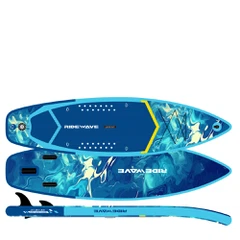
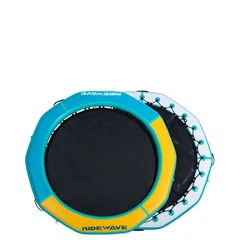
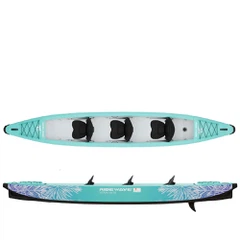
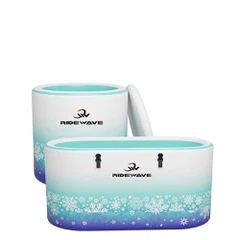

Why Choosing the Right SUP Supplier Matters More Than Ever
The global stand-up paddle board market continues to expand across North America, Europe, and Australia. What started as a niche water sport has evolved into a mainstream outdoor lifestyle category, driven by travel, wellness trends, and the growing popularity of inflatable equipment.
For distributors, wholesalers, and outdoor brands, this growth presents a clear opportunity. However, success in the SUP business is not determined by demand alone-it is largely defined by the quality and reliability of your supplier.
Many buyers entering the SUP category underestimate how critical supplier selection is. Common issues such as inconsistent product quality, delayed shipments, unclear communication, or lack of product differentiation can quickly erode margins and damage your brand reputation.
In fact, the difference between a scalable SUP business and a struggling one often comes down to a single factor: choosing the right inflatable SUP supplier from the beginning.
This guide is designed to help distributors:
Identify reliable paddle board manufacturers
Avoid common sourcing risks
Build a profitable and scalable SUP product line
Today, more distributors are shifting toward flexible and experienced manufacturing partners-companies like RIDEWAVE, which combine stable production, modern design capabilities, and adaptable order structures to support long-term growth.
1. The Global SUP Market Opportunity in 2026 SUP Industry
The global SUP industry in 2026 has moved beyond rapid emergence and entered a phase of more stable and structured growth. For distributors, wholesalers, and outdoor brands, this shift represents a meaningful opportunity to enter a category that combines strong demand with relatively manageable logistics. Compared to many traditional water sports products, inflatable SUP boards are easier to transport, store, and distribute, making them especially attractive for businesses looking to scale efficiently across multiple sales channels.
Across key regions such as the United States, Canada, Australia, and Europe, stand-up paddle boarding continues to gain traction as part of a broader outdoor lifestyle trend. Consumers are increasingly investing in experiences that combine fitness, relaxation, and travel, and SUP fits naturally into this space. This has led to consistent demand not only from end users, but also from rental operators, resorts, and retail chains, creating a diversified and resilient distribution landscape.
At the product level, the market is becoming more sophisticated. Buyers are no longer satisfied with basic designs or generic boards. Instead, there is a clear shift toward lightweight construction, refined aesthetics, and environmentally conscious materials. At the same time, private label SUP programs are gaining momentum, as more distributors aim to build their own brand identity rather than compete purely on price. This trend opens the door for suppliers who can offer both customization and design support.
For distributors evaluating entry or expansion in the SUP category, this means that success depends not only on choosing the right products, but also on selecting the right inflatable SUP supplier. A supplier that understands global market trends, offers flexible production capabilities, and maintains consistent quality standards can significantly reduce risk and accelerate growth. Manufacturers such as RIDEWAVE have aligned their product development and production models with these evolving market needs, enabling distributors to respond faster to demand while building a more competitive and differentiated product offering.
2. Common SUP Sourcing Problems Distributors Must Avoid
Sourcing SUP boards may appear straightforward at first, but for many distributors, the real challenges only emerge after placing an order. While pricing and product images often look attractive upfront, underlying issues in manufacturing and communication can quickly create costly setbacks. Understanding these common sourcing problems is essential for minimizing risk and building a stable supply chain.
One of the most frequent issues distributors encounter is inconsistent product quality. While initial samples may meet expectations, bulk production can vary significantly if the manufacturer lacks strict quality control systems. Differences in material density, seam construction, or finishing details can lead to customer complaints, product returns, and reputational damage. For businesses selling under their own brand, this inconsistency directly impacts long-term credibility in the market.
Another major concern is unreliable lead times. In the SUP industry, timing is critical, especially for seasonal markets such as North America and Europe. Delays in production or shipping can result in missed peak sales windows, leaving distributors with unsold inventory or lost revenue opportunities. Without clear production schedules and transparent updates, distributors are left operating with uncertainty, which complicates planning and inventory management.
High minimum order quantities also present a significant barrier, particularly for businesses testing new products or entering the SUP category for the first time. Large MOQ requirements increase financial pressure and limit flexibility, making it difficult to adapt quickly to market feedback. In contrast, distributors increasingly prefer working with suppliers who offer scalable order structures that allow gradual growth.
At the same time, lack of product differentiation remains a critical challenge. The global SUP market is becoming more competitive, and generic designs often force distributors into price-based competition. Without access to customization or design support, it becomes difficult to build a recognizable brand or maintain healthy margins. This is especially important for businesses aiming to develop private label SUP lines.
Communication issues further compound these risks. Slow responses, unclear specifications, or misunderstandings during the ordering process can lead to incorrect production, delays, or additional costs. Effective communication is not just about speed, but also about clarity and professionalism throughout the collaboration.
To address these challenges, many distributors are shifting toward more structured and reliable manufacturing partners. Suppliers like RIDEWAVE have gained attention by focusing on consistent production standards, flexible MOQ options, and clear communication processes, helping distributors reduce uncertainty and operate with greater confidence in an increasingly competitive SUP market.
What Defines a Reliable SUP Supplier in 2026 SUP Industry
In a competitive and fast-evolving market, choosing a reliable SUP supplier is no longer just about comparing prices. Distributors need to evaluate suppliers based on their ability to deliver consistent results over time, support brand development, and adapt to changing market demands. A strong supplier relationship is often the foundation of a successful and scalable SUP business.
One of the most critical factors is manufacturing consistency. A dependable paddle board manufacturer maintains stable production standards across every order, ensuring that materials, construction, and finishing remain consistent from sample to bulk production. This includes the use of high-quality drop-stitch cores, durable PVC layers, and controlled lamination processes. Consistency not only reduces returns but also strengthens brand trust in the long run.
Flexibility in order structure is another defining characteristic of a reliable supplier. Distributors today need the ability to start with smaller quantities, test different models, and scale production as demand grows. Suppliers that support flexible MOQ arrangements enable businesses to reduce inventory risk and respond more effectively to market feedback. This scalability is particularly valuable for companies launching new private label SUP collections.
Design and customization capability have also become essential. As the market shifts toward branding and differentiation, distributors require more than standard, off-the-shelf products. A supplier that can offer tailored graphics, unique color schemes, and trend-aligned designs provides a significant competitive advantage. This is where experienced manufacturers play a key role, helping distributors translate market insights into sellable products.
Equally important is transparent and efficient communication. Reliable suppliers provide clear quotations, detailed specifications, and timely updates throughout the production process. This level of professionalism reduces misunderstandings and ensures smoother collaboration, especially for international orders where time zones and logistics add complexity.
Compliance and certification should not be overlooked. Depending on the target market, suppliers must meet relevant safety and quality standards such as CE or ISO certifications. Proper documentation ensures smoother customs clearance and builds confidence with retailers and end customers.
In practice, distributors increasingly favor suppliers that combine all of these elements rather than excelling in just one area. Manufacturers like RIDEWAVE have positioned themselves by integrating consistent production quality, flexible manufacturing models, and strong design support, making them a practical choice for distributors aiming to build long-term, sustainable SUP businesses in global markets.
What SUP Products Actually Sell in 2026 SUP Market
Understanding what sells is just as important as choosing the right supplier. Many distributors enter the SUP category with a focus on product features, but the real driver of success is market fit-selecting boards that align with consumer demand, pricing expectations, and usage scenarios.
In 2026, all-around inflatable SUP boards continue to dominate the entry-level and mid-range segments. Their versatility makes them ideal for beginners, families, and casual users, which represent the largest portion of the market. These boards are easy to market, simple to position, and perform well across both online and offline retail channels. For distributors, they provide a reliable foundation for building consistent sales volume.
Touring SUP boards are also gaining traction, particularly among more experienced users who value speed, tracking, and longer-distance paddling. This segment tends to support higher price points, making it attractive for distributors seeking improved margins. As outdoor enthusiasts increasingly look for performance-oriented products, touring boards are becoming an essential part of a well-rounded product lineup.
At the same time, niche categories such as fishing SUPs, yoga boards, and multi-functional designs are expanding steadily. While these products may not generate the same volume as all-around boards, they offer strong differentiation and appeal to specific customer groups. Including a small selection of specialized models can help distributors stand out in competitive markets and avoid direct price competition.
Design has also become a critical factor influencing purchasing decisions. Clean layouts, natural color palettes, and subtle gradients are replacing overly complex graphics. Consumers increasingly associate minimal design with higher quality and brand credibility. This is particularly important for distributors building private label SUP brands, where visual identity directly impacts perceived value.
Working with an experienced inflatable SUP supplier can significantly improve product selection decisions. Manufacturers such as RIDEWAVE support distributors by developing market-oriented designs and offering diversified product lines that reflect current trends, helping businesses launch products that are not only well-made, but also easier to sell.
Why Low MOQ and Flexibility Matter in SUP Distribution
In today's market environment, flexibility has become one of the most valuable advantages a supplier can offer. For distributors, especially those entering the SUP category or expanding their product range, committing to large inventory upfront carries significant risk.
Low minimum order quantities allow distributors to test different products without overextending their budget. Instead of relying on assumptions, businesses can validate demand with real market feedback, identify best-selling models, and refine their product strategy before scaling up. This approach reduces financial pressure while improving decision-making accuracy.
Flexibility also enables faster adaptation to changing trends. Consumer preferences in the SUP market continue to evolve, influenced by design trends, social media, and seasonal demand. Distributors who can quickly adjust their product mix-adding new designs, modifying features, or introducing limited collections-are better positioned to stay competitive.
Another important aspect is customization. As more businesses move toward private label SUP strategies, the ability to create unique designs in smaller quantities becomes a key differentiator. Suppliers that support flexible customization help distributors build brand identity without requiring large upfront commitments.
From a long-term perspective, scalable production is equally important. A supplier should not only support small trial orders, but also be capable of handling larger volumes as the business grows. This balance between flexibility and scalability is essential for sustainable expansion.
Manufacturers like RIDEWAVE have gained recognition by offering adaptable MOQ structures and customization support, allowing distributors to start small, reduce risk, and scale confidently as demand increases.
6. SUP Pricing, Margins, and Profitability for Distributors
Pricing strategy is one of the most important factors determining long-term success in the SUP business. While it may be tempting to focus on securing the lowest possible cost, experienced distributors understand that profitability depends on a combination of pricing, positioning, and perceived value.
In most markets, distributors operate within a structure that includes landed cost, wholesale pricing, and retail markup. A healthy margin typically requires careful balance-products must be competitively priced while still allowing sufficient room for marketing, logistics, and operational expenses. Choosing a supplier solely based on low pricing often leads to compromises in quality, design, or reliability, which can ultimately reduce profitability rather than improve it.
Avoiding price competition is critical in a crowded market. When products lack differentiation, distributors are forced into a race to the bottom, where margins shrink and brand value diminishes. On the other hand, well-designed boards with clear positioning can command higher retail prices and build stronger customer loyalty.
This is where product design, branding, and supplier support become closely connected to profitability. Suppliers that offer modern designs, consistent quality, and customization options enable distributors to position their products more effectively, rather than competing purely on cost.
Private label SUP strategies further enhance margin potential by allowing distributors to create unique offerings under their own brand. This approach not only improves pricing control but also strengthens long-term customer relationships.
Manufacturers such as RIDEWAVE contribute to this process by providing stable product quality and design-oriented solutions, helping distributors move beyond price competition and focus on building profitable, differentiated product lines in the global SUP market.
7. SUP Logistics and Delivery: What Distributors Must Confirm Before Ordering
Logistics and delivery planning play a critical role in the overall success of a SUP business, yet they are often underestimated during the supplier selection process. Even when product quality and pricing are competitive, poor logistics coordination can disrupt operations, delay market entry, and increase unexpected costs.
For distributors working with an inflatable SUP supplier, it is essential to clearly define shipping terms from the beginning. Common arrangements such as FOB, CIF, or DDP each come with different responsibilities and cost structures. Understanding these terms helps avoid confusion and ensures accurate cost calculation when planning pricing and margins.
Lead time is another key factor that directly impacts sales performance. Production timelines should be clearly communicated and aligned with seasonal demand, especially for markets with strong summer sales cycles. Reliable suppliers provide realistic timelines and regular updates, allowing distributors to plan inventory and marketing activities with confidence.
Packaging is also an important but often overlooked detail. Well-designed packaging protects the product during transit, reduces damage rates, and improves the overall customer experience. For distributors building private label SUP brands, packaging also serves as an extension of brand identity and should be considered as part of the product strategy.
As global supply chains continue to evolve, distributors increasingly value suppliers who can provide stable logistics coordination and transparent communication throughout the shipping process. Manufacturers such as RIDEWAVE support distributors by offering structured delivery planning and clear shipment updates, helping reduce uncertainty and improve operational efficiency.
8. How to Evaluate a SUP Supplier Before You Place an Order
Before committing to a large order, distributors should take a structured approach to evaluating potential suppliers. A careful evaluation process not only reduces risk but also ensures long-term compatibility between both parties.
One of the most effective steps is to start with sample testing. Reviewing a physical product provides insights that cannot be fully captured through images or specifications. Distributors should assess build quality, material durability, and overall finish to ensure the product meets market expectations.
Communication during the early stages is equally important. The responsiveness, clarity, and professionalism of a supplier often reflect how future cooperation will unfold. Suppliers who provide detailed answers, clear quotations, and proactive updates are generally more reliable partners.
Factory verification is another valuable step, particularly for larger orders. This can include reviewing certifications, production capabilities, and quality control processes. Even if an on-site visit is not possible, video inspections or third-party audits can provide useful insights.
It is also important to evaluate how well the supplier understands your market. Suppliers who can provide suggestions on product selection, design trends, or packaging demonstrate a higher level of experience and commitment. This type of collaboration adds value beyond basic manufacturing.
Distributors increasingly prefer working with suppliers like RIDEWAVE, who not only deliver products but also provide guidance throughout the sourcing process, helping buyers make more informed and confident decisions.
9. How Distributors Successfully Scale Their SUP Business
Building a successful SUP business rarely happens overnight. Most distributors follow a gradual process, starting with small orders and expanding as they gain confidence in both the product and the market.
In the early stage, testing is essential. Distributors typically begin with a limited selection of products to evaluate market response. This approach minimizes risk and provides valuable data on which models perform best.
As sales begin to stabilize, the focus shifts toward building a more structured product line. This may include expanding into different board types, refining design consistency, and developing a recognizable brand identity. At this stage, private label SUP strategies become increasingly important, allowing distributors to differentiate themselves in a competitive market.
With continued growth, distributors move into scaling operations. Larger order volumes, broader distribution channels, and more advanced marketing strategies come into play. At this level, having a reliable and flexible supplier becomes critical to maintaining consistency and meeting demand.
Throughout this process, the choice of supplier has a lasting impact. Many growing distributors choose to partner with manufacturers like RIDEWAVE, who can support each stage-from initial testing to large-scale production-while maintaining product quality and operational flexibility.
10. How to Start Your SUP Sourcing Journey with Confidence
Starting your SUP sourcing journey requires a clear plan and a structured approach. Rather than rushing into large orders, successful distributors take the time to define their strategy and build a solid foundation.
The first step is understanding your target market. Identifying your customer segment, price positioning, and preferred product types helps narrow down supplier options and ensures better alignment from the beginning.
Next, selecting the right products is essential. A balanced product mix that includes high-volume items and differentiated models provides both stability and growth potential. This approach allows distributors to generate consistent revenue while exploring new opportunities.
Reaching out to suppliers should be done with clear expectations. Providing detailed requirements, asking the right questions, and requesting samples help establish a professional working relationship from the start.
Finally, starting with a test order is often the most practical approach. This allows distributors to evaluate product quality, communication efficiency, and overall reliability before committing to larger volumes.
For distributors seeking a reliable inflatable SUP supplier, working with experienced manufacturers such as RIDEWAVE can simplify this process. With structured support, flexible production options, and market-oriented product development, distributors can move forward with greater confidence and reduced risk.
Building a Sustainable SUP Business Starts with the Right Supplier
The global SUP market continues to offer strong opportunities for distributors, wholesalers, and outdoor brands. However, long-term success depends not only on market demand, but on the strength of your supply chain.
Choosing the right SUP supplier means more than securing competitive pricing. It involves finding a partner who can provide consistent quality, flexible production, reliable communication, and ongoing support as your business grows.
Distributors who take a strategic approach-testing products, building differentiated offerings, and focusing on long-term value-are better positioned to succeed in an increasingly competitive market.
If you are looking to expand your product line, enter the SUP category, or develop your own private label SUP brand, working with an experienced and adaptable manufacturer can make a significant difference.
Manufacturers such as RIDEWAVE continue to support global distributors by offering practical solutions tailored to real market needs, helping businesses grow with confidence in a dynamic industry.